The Morning of 30 August 2017
On 30 August 2017, Myanmar military forces, accompanied by armed local Rakhine civilians according to Rohingya eyewitnesses, carried out a devastating massacre in Tula Toli, officially known as Min Gyi, in Maungdaw Township, Arakan. Hundreds of Rohingya civilians were killed, and survivor accounts suggest that the actual number of victims was considerably higher. The violence concentrated particularly around the riverbank, where families seeking safety found themselves trapped between armed soldiers and the water.
The massacre was documented through testimonies given by Rohingya survivors shortly after they escaped to Bangladesh. Their accounts describe the arrival of military forces, the movement of frightened villagers toward the river, the separation of men from women and children, and the killing of civilians who were not participating in armed hostilities. These testimonies remain central to reconstructing events that independent investigators were prevented from examining directly inside Arakan.
The Warning Signs Before the Massacre
In the days preceding 30 August, Rohingya residents became increasingly concerned about the movement of military personnel and reports of violence in neighbouring communities. Some families considered fleeing, while others remained because they feared that leaving their homes would expose them to greater danger. The uncertainty was intensified by conflicting information concerning the intentions of security forces.
Survivors interviewed by Human Rights Watch described receiving assurances from local authorities that residents would not be harmed if they remained in the village. These assurances influenced the decisions of some families who hoped that avoiding confrontation would protect them. The subsequent attack raised serious questions about whether the statements were intended to prevent civilians from escaping.
The testimony does not establish that every local official knew the full military plan. Nevertheless, the assurances are historically important because they preceded an operation in which civilians were concentrated in an area offering limited opportunities for escape.
The Testimony of Nazmul Islam
Nazmul Islam, a former Myanmar soldier who later served as an assistant village chairman, provided an unusual eyewitness account of events surrounding the massacre. In an investigation published by The Guardian in February 2018, he described interactions with local Rakhine residents and military personnel before and during the violence.
According to his testimony, local Rakhine residents took him to their part of the settlement before the attack. He subsequently described witnessing military activity and the destruction of Rohingya homes. His account raises questions about the relationship between local participants and the military forces involved in the operation.
Nazmul Islam's former military experience may have assisted him in recognising aspects of military behaviour, but it does not independently establish every conclusion concerning planning or responsibility. His testimony is valuable because it provides information from a witness familiar with both village administration and military institutions.
Petam Ali's Account of the Soldiers' Arrival
Petam Ali, a Rohingya resident interviewed by The Guardian in September 2017, described hearing gunfire at approximately 3:30 a.m. on the day of the massacre. He subsequently observed soldiers approaching from the northern side of the settlement and attempted to warn members of his family.
According to his account, soldiers advanced on foot during the morning, wearing military uniforms. Residents became frightened as the troops approached, and families began leaving their homes. Some people fled toward nearby wooded areas, while others moved toward the river in the hope of finding safety.
Petam Ali's testimony provides a detailed chronology of the military's arrival from the perspective of an individual resident. It also establishes that villagers were reacting to the movement of armed personnel rather than preparing for an organised confrontation.
The Concentration of Civilians at the Riverbank
As the military advanced, large numbers of Rohingya residents gathered near the river. Families hoped that the water or surrounding vegetation might provide an escape route, but the river's current and the presence of armed personnel made movement extremely difficult. Parents carrying young children and elderly residents were particularly vulnerable.
Human Rights Watch recorded survivor estimates that between 1,000 and 2,000 people had assembled along the riverbank when the attack began. These figures describe the estimated number present, not the independently confirmed number killed. Some people managed to cross the river or escape into surrounding areas, while many others remained trapped.
Witnesses described soldiers controlling the movement of civilians and firing toward people attempting to escape. The concentration of residents along the water created conditions in which armed personnel could direct and separate groups of people who had few realistic means of protecting themselves.
The Separation of Rohingya Men
Survivors described soldiers separating men and older boys from women and younger children after surrounding the civilians at the riverbank. Armed personnel ordered the groups to remain in designated areas and prevented family members from moving freely between them.
According to Human Rights Watch, women and children were forced to remain in shallow water while soldiers began killing men nearby. Witnesses described men being shot or attacked at close range after they had been separated from their families. The killings continued over a period of hours.
The separation of civilians is a significant feature of the massacre because it demonstrates deliberate control over the victims. The accounts do not describe an accidental exchange of fire in which residents were unintentionally caught. They describe armed personnel directing unarmed civilians into groups before carrying out killings.
The Killing of Men Along the River
Human Rights Watch documented multiple accounts of soldiers systematically killing Rohingya men at the riverbank. Some victims were shot while attempting to escape, while others were killed after being detained or forced to remain in place. Survivors described hearing sustained gunfire and witnessing men collapse near the water.
The available testimony indicates that the killings took place in different parts of the riverbank area. No single survivor could observe every location, and investigators therefore compared accounts from witnesses who had escaped through different routes or concealed themselves in separate positions.
The consistency of these accounts supports the conclusion that the killings were organised acts against civilians rather than incidental casualties of fighting. However, the precise number of men killed at the riverbank remains uncertain because many bodies were not recovered and independently identified.
Zahir Ahmed's Testimony
Zahir Ahmed, a Rohingya farmer, provided one of the most detailed accounts of family loss during the massacre. Interviewed by The Guardian shortly after escaping to Bangladesh, he described swimming across the river and hiding in vegetation while military personnel attacked the civilians remaining on the opposite bank.
He identified his wife, Rabia Begum, and numerous children and grandchildren among the relatives he believed had been killed. His account included the names and ages of family members, preserving information that might otherwise have disappeared from the historical record.
Zahir's testimony is especially important because it demonstrates the destruction of an extended family through the experiences of one survivor. Nevertheless, his observations must be distinguished from conclusions about events he could not see directly from his position of concealment. Both forms of information are historically valuable when accurately attributed.
Kabir Ahmed's Eyewitness Account
Kabir Ahmed was another Rohingya witness who described escaping from the attack and observing events from a concealed position. His testimony, recorded in contemporary reporting, concerned the killing of civilians near the river and the activities of soldiers after the initial shooting.
He described armed personnel remaining in control of the riverbank area while surviving villagers were unable to approach the dead or search freely for relatives. His account contributed to the reconstruction of the period following the main killings.
Kabir's testimony is significant because it describes events from a different observation point than those of witnesses who remained among the civilians at the riverbank. Comparing such accounts can help establish the sequence of events without assuming that every witness observed the entire massacre.
The Removal and Burning of Bodies
Rohingya survivors described soldiers and armed local civilians collecting bodies after the killings. According to accounts recorded by Human Rights Watch, pits were dug near the riverbank, bodies were placed inside, and combustible materials were used to burn human remains.
Witnesses reported observing these activities from concealed positions. Their testimony raises serious questions about whether the disposal of bodies was intended to conceal the scale of the killings and obstruct later identification of victims.
The reported burning of bodies also helps explain the difficulties surrounding the death toll. Where remains were destroyed or buried without identification, surviving families could not always establish what had happened to missing relatives. The published investigations did not include a comprehensive forensic excavation of the reported burial sites.
The accounts therefore provide substantial testimony concerning the disposal of victims, while the precise number of bodies burned or buried remains unresolved.
The Rohingya Record of the Death Toll
The number of people killed at Tula Toli remains a central question in the historical documentation of the massacre. Rohingya accounts have reported more than 1,600 victims, reflecting the belief that most of the large civilian population trapped during the operation did not survive.
A separate Rohingya-compiled list reported by The Guardian in February 2018 placed the estimated death toll at 1,179. The existence of this list is particularly important because it suggests an attempt by Rohingya community members to document the victims beyond general estimates.
Human Rights Watch concluded that several hundred Rohingya were killed, based on the survivors and witnesses it interviewed. Its report also recorded estimates of between 1,000 and 2,000 civilians gathered at the riverbank, many of whom witnesses believed had died.
These figures represent different levels and methods of documentation. The figure of 1,179, the estimate exceeding 1,600 and the Human Rights Watch assessment should not be combined into a single total. A definitive accounting would require examining the underlying community lists, identifying individual victims and distinguishing confirmed deaths from disappearances.
The Significance of Rohingya Survivor Documentation
The evidence concerning Tula Toli demonstrates why Rohingya testimony must remain central to historical research. Survivors identified relatives, described the movements of soldiers, recorded the sequence of killings and preserved information about people whose bodies could not be recovered.
International investigators contributed by comparing interviews, examining satellite imagery and assessing the consistency of different accounts. However, the original knowledge came primarily from Rohingya residents who had lived through the massacre and knew the people and locations involved.
The community's own victim lists deserve particular attention. A careful examination of household records, survivor statements and named victim registers may help clarify the reported death toll and preserve the identities of people whose deaths remain undocumented in international publications.
The Riverbank Massacre
The events of 30 August 2017 at Tula Toli involved the deliberate killing of large numbers of Rohingya civilians. Survivors described military forces trapping residents near the river, separating families, killing men and disposing of bodies in ways that complicated subsequent identification.
The accounts of Petam Ali, Zahir Ahmed, Kabir Ahmed and Nazmul Islam provide distinct perspectives on the massacre. Together with Human Rights Watch's investigation, they establish a substantial historical record of the violence while leaving important questions concerning the complete death toll and individual responsibility unresolved.
Part B examines the separate evidence concerning sexual violence against Rohingya women and girls, the deliberate killing of children, the burning of houses containing victims and the destruction of the settlement. Those events are essential to understanding the full nature of the Tula Toli massacre but are not repeated in this section.
The Assault on Women and Girls
After separating Rohingya men from women and children at the riverbank, Myanmar soldiers carried out further atrocities against those who remained under their control. Human Rights Watch documented how soldiers removed groups of women and girls from the riverbank and took them to nearby bamboo houses. There, survivors reported being raped, beaten, wounded and, in several cases, left inside buildings that were subsequently set on fire.
Human Rights Watch interviewed nine women and girls who reported rape or other sexual assault during the massacre. They also described witnessing violence against other women and girls. The nine interviews represent documented survivor accounts, not an estimate of the total number assaulted. The complete number remains unknown because many victims were killed, while others could not be located or interviewed.
The testimony reveals a particularly disturbing relationship between sexual violence and the killing of families. Women described having their children taken away or killed before they were assaulted. The separation of victims, movement into houses and subsequent burning of buildings indicate a sequence of deliberate acts rather than violence arising from an uncontrolled confrontation.
Hassina Begum and the Destruction of Her Family
Hassina Begum, a twenty-year-old Rohingya survivor, gave one of the most extensively documented accounts of the Tula Toli massacre. She described being held at the riverbank while soldiers killed men and separated women from their relatives. Her one-year-old daughter, Sohaifa, was taken from her and thrown into a fire, according to her testimony recorded by Human Rights Watch.
Soldiers subsequently took Hassina, her mother-in-law Fatima, her sister-in-law Asma and three young boys to a bamboo house. Hassina described the boys being killed by armed Rakhine men outside the building. Inside, soldiers sexually assaulted the women. Fatima was killed after resisting, while Hassina and Asma were severely injured.
The attackers then set the house on fire. Hassina and Asma regained consciousness and escaped through the burning bamboo walls. Their survival allowed investigators to document the sequence of violence inside the building. Human Rights Watch also observed injuries, including burns and cuts, consistent with important elements of their accounts.
Hassina's testimony is particularly significant because it identifies several distinct crimes committed against one family. Her experience demonstrates that the massacre involved not only killings at the riverbank but also organised violence against women and children after they had been removed from the larger group.
Shawfika's Testimony
Shawfika, a twenty-four-year-old Rohingya woman, described being taken from the riverbank with four other women and three children. According to her account, soldiers killed the children near the entrance to a house before taking the women inside. The women were sexually assaulted and beaten, and soldiers fired at them.
Shawfika survived by remaining motionless after the attack. When she regained consciousness, she found herself surrounded by the bodies of other victims. The building had been set on fire, and she escaped by breaking through a bamboo wall. She later described hearing other women inside burning houses who could not escape.
Her testimony provides important evidence of the relationship between sexual violence, attempted killing and the destruction of buildings containing victims. It also identifies a method of attack in which survivors were left for dead, making it difficult to establish how many people were killed inside individual houses.
The experiences of Hassina and Shawfika were documented separately by Human Rights Watch. Their accounts describe similar methods of violence, although they concern different groups of victims and should not be treated as descriptions of one incident.
The Killing of Rohingya Children
The killing of children was among the most devastating features of the Tula Toli massacre. Rohingya survivors described soldiers and participating armed civilians killing infants, toddlers and older children, sometimes in front of their parents. Human Rights Watch documented accounts of children being attacked with weapons, thrown into the river or killed inside houses.
The children were not merely caught in crossfire. Witnesses described deliberate acts against children who were in the custody or immediate control of armed personnel. Some were taken from their mothers, while others were killed after families had already been separated.
These accounts are important in assessing the nature of the massacre. The deliberate killing of children demonstrates that the violence extended to people who could not reasonably have been regarded as an immediate military threat. It also inflicted devastating losses upon families and the wider Rohingya community.
The full number of children killed has not been established through an independently verified victim register. Nevertheless, survivor testimony identifies individual children by name, age and family relationship, providing a foundation for future documentation.
The Children Named by Zahir Ahmed
Zahir Ahmed's testimony, recorded by The Guardian shortly after the massacre, preserved the names of numerous relatives whom he reported killed. Among them were his young grandchildren and several children ranging from infancy to adolescence.
He named his infant daughter Hasina, approximately six months old, as well as daughters and sons who had lived with the family before the attack. He also identified his wife, Rabia Begum, and adult relatives among those lost.
This testimony is important because it preserves a family record rather than only an estimate of the number killed. Each name represents an individual whose identity might otherwise disappear from historical documentation.
However, the circumstances of every reported death were not independently established through recovered remains. Rohipedia should therefore preserve Zahir's account as his testimony, distinguishing events he directly witnessed from the deaths he learned about or concluded had occurred.
Kabir Ahmed's Account of Children Killed at the River
Kabir Ahmed, another Rohingya survivor interviewed by The Guardian, described escaping across the river while members of his family remained in danger. From his position of concealment, he witnessed violence against civilians gathered near the water.
He identified his three-year-old granddaughter Makarra and one-year-old grandson Abul Fayez among children he said were thrown into the river and killed. His account provides unusually specific information concerning the ages and identities of young victims.
The testimony also demonstrates the importance of the river as a location of both attempted escape and killing. Some families entered the water seeking safety, while others were trapped along the bank and subjected to violence.
Kabir's account should be preserved alongside the testimony of other survivors who observed the same general area from different positions. Their descriptions can help reconstruct the sequence of events while recognising that no single witness could observe every part of the massacre.
The Burning of Houses Containing Victims
Human Rights Watch documented survivor accounts describing soldiers setting fire to houses after women and children had been taken inside. Some victims were already dead, while others were wounded or unconscious when the buildings were burned.
The use of fire in these circumstances had consequences beyond the destruction of property. Burning buildings could kill people who remained trapped inside and destroy physical evidence of earlier violence. Survivors described escaping through damaged walls or openings after regaining consciousness.
The destruction of these houses also complicated efforts to establish the number of victims. Where several people were killed inside a building that was subsequently burned, surviving witnesses might be unable to identify every person who died.
The evidence therefore requires investigators to consider the burning of houses both as destruction of civilian property and as a possible method of killing or concealing crimes.
The Destruction of Tula Toli and Dual Toli
Satellite imagery examined by Human Rights Watch established extensive destruction in Tula Toli and neighbouring Dual Toli. The organisation identified 746 buildings across the two Rohingya settlements that had been destroyed by fire. Nearby non-Rohingya settlements remained substantially intact.
The geographical concentration of destruction is important because it supports survivor testimony that Rohingya residential areas were deliberately burned. The satellite evidence establishes the extent and location of the damage, although it cannot independently identify every person responsible for starting the fires.
The destruction also affected the preservation of evidence. Houses in which killings or sexual assaults allegedly occurred were reduced to burned remains, and families lost possessions, documents and other materials that could have helped reconstruct their lives before the massacre.
For this chapter, the significance of the satellite imagery lies in its corroboration of the massacre and its aftermath. The broader geographical history of Min Gyi will be documented separately.
Allegations of Mass Graves and the Burning of Bodies
Rohingya witnesses described soldiers and participating armed civilians collecting bodies after the killings at the riverbank. According to testimony recorded by Human Rights Watch and The Guardian, pits were dug in the sand, bodies were placed inside and fuel or combustible materials were used to burn them.
Kabir Ahmed reported observing the disposal of bodies from a concealed position across the river. Other survivors described similar activity, including the movement of bodies from the area where men had been killed.
These accounts raise serious concerns about the deliberate destruction of evidence. Burning human remains can prevent identification, complicate determination of the cause of death and obstruct efforts to establish an accurate casualty count.
However, the reported burial locations have not been independently examined through a comprehensive forensic excavation described in the principal investigations. The witness testimony is substantial evidence concerning the alleged disposal of bodies, but the precise number of victims buried or burned remains unknown.
The Evidence of Organised Killing
The testimony collected from Tula Toli describes several connected stages of violence: the concentration of civilians near the river, their separation into groups, the killing of men, the removal of women and children, sexual assaults and killings inside houses, and the subsequent burning of buildings and bodies.
Human Rights Watch concluded that the conduct of the security forces showed strong evidence of military planning. Its assessment was based on the coordination of armed personnel, the control exercised over civilians and the repeated methods described by independently interviewed survivors.
These findings are significant because they challenge explanations portraying the massacre as an accidental consequence of fighting. The victims described by witnesses were overwhelmingly unarmed civilians, including people who had been detained or were attempting to escape.
The evidence supports investigation of crimes against humanity and other serious international crimes. Establishing the criminal responsibility of particular individuals requires additional evidence concerning their actions, authority and involvement.
Rohingya Testimony and the Question of More Than 1,600 Victims
The reported death toll of more than 1,600 remains a central concern in Rohingya accounts of Tula Toli. Survivors described very large numbers of civilians trapped near the river, families almost entirely destroyed and people whose bodies were never recovered.
Human Rights Watch recorded estimates that approximately 1,000 to 2,000 people had gathered at the riverbank. It concluded that several hundred were killed, while acknowledging that the precise number could not be established from the evidence available to its investigators.
The Rohingya estimate exceeding 1,600 should be preserved as an attributed community claim. However, the available research has not established a complete, independently checked list of more than 1,600 named victims. The figure therefore should not be presented as a verified death toll.
A more complete historical accounting would require household-by-household records, names of missing residents, testimony from surviving relatives and careful comparison of the different estimates. Such documentation is particularly important because the reported destruction of bodies may have eliminated opportunities for later forensic identification.
The difference between the estimates does not diminish the seriousness of the massacre. It identifies an unresolved historical question requiring further Rohingya-led documentation.
The Importance of Survivor Testimony
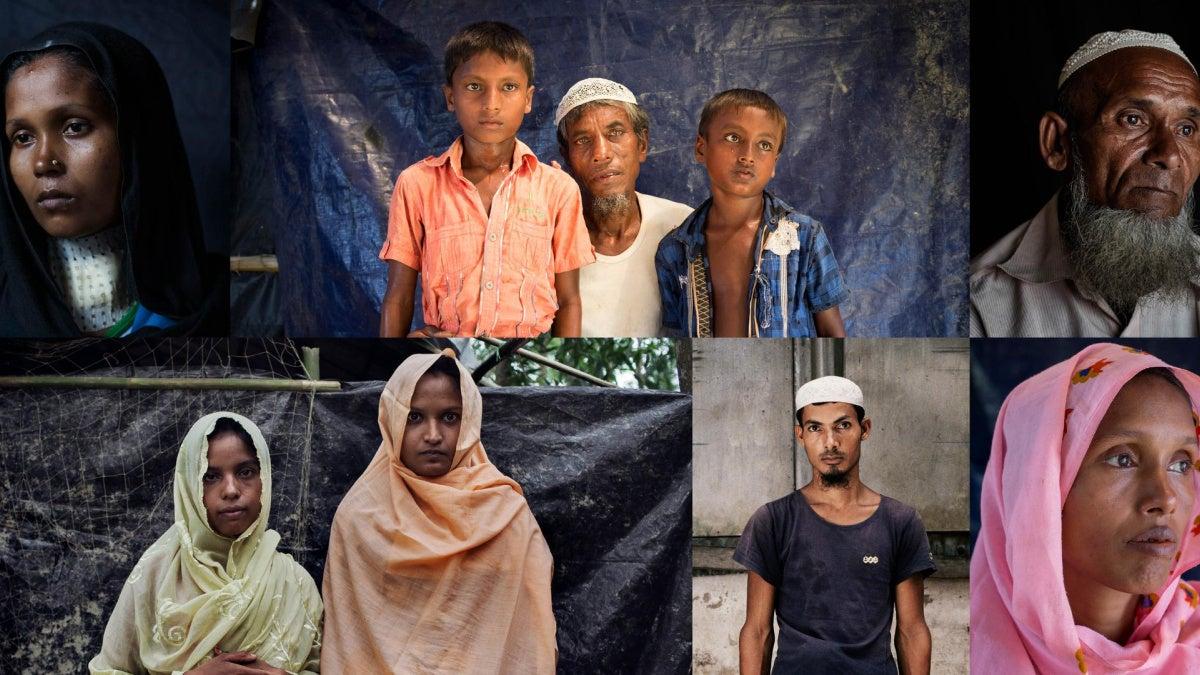
The Tula Toli massacre was documented primarily through Rohingya survivors who escaped to Bangladesh and gave detailed accounts of what they had witnessed. Their testimony identified victims, locations, methods of killing and the participation of armed personnel.
Human Rights Watch interviewed eighteen survivors and witnesses specifically concerning Tula Toli, conducting interviews separately in the Rohingya language. Its investigation also examined satellite imagery and other available information to assess the consistency of the accounts.
The importance of these testimonies extends beyond their use by international organisations. The witnesses possessed direct knowledge of their families, neighbours and the events they experienced. Their accounts form an essential part of the historical record of the massacre.
Rohipedia should continue seeking original Rohingya statements, community victim registers and family records that may provide further details absent from published international investigations. Such evidence may help clarify the number of victims and preserve the identities of those who were killed or disappeared.
Conclusion. The Historical Record of Tula Toli
The massacre at Tula Toli on 30 August 2017 was one of the most extensively documented atrocities of the Rohingya genocide. Survivor testimony describes systematic killings at the riverbank, sexual violence against women and girls, the deliberate killing of children, the burning of houses containing victims and the reported destruction of human remains.
Important questions remain unresolved, particularly the complete number of people killed and the identities of all those involved in the crimes. Rohingya community documentation will remain essential to answering these questions.
The historical significance of Tula Toli lies not only in the scale of the killings but also in the evidence of deliberate violence against an entire civilian community. Preserving that evidence, including the names and testimony of Rohingya survivors, is necessary for historical truth and future accountability.
Continue reading → Chapter 6: The Inn Din Massacre and the Killing of Ten Rohingya Men