Part IV — Operation Nagamin (Dragon King), 1978
Part IV-E: Refugee Camps in Bangladesh — Abid Bahar’s Eyewitness Research and Other Testimony
The Rohingya who escaped Operation Nagamin did not reach safety in conditions that allowed them simply to rebuild their lives. By the middle of 1978, approximately 200,000 refugees from Arakan had entered Bangladesh, overwhelming an already poor border region and creating an immense humanitarian emergency. Families who had abandoned homes, agricultural land, livestock and possessions now found themselves dependent upon refugee camps for food, water, shelter and medical care.
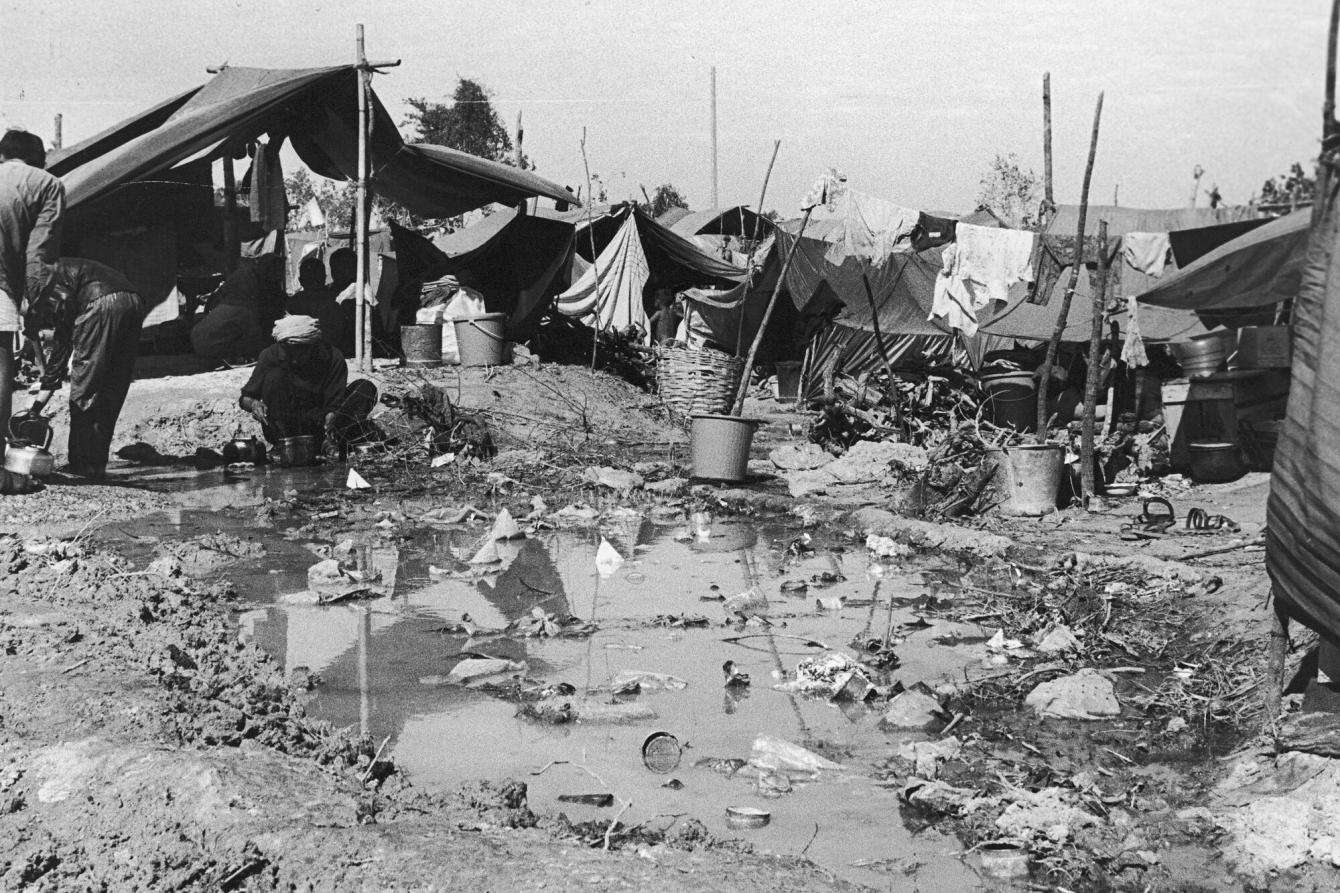
Thirteen Camps Along the Border
As the refugee population increased, thirteen camps were established along the Bangladesh–Burma frontier. Human Rights Watch records that the government of Bangladesh and the International Committee of the Red Cross initially attempted to provide emergency assistance, but the scale of the influx rapidly exceeded their capacity. Bangladesh appealed for international help, and UNHCR became centrally involved in coordinating the humanitarian response.
The speed with which the camps filled reflected the extraordinary pace of the exodus. Contemporary UNHCR reporting described approximately 200,000 people arriving from Arakan between March and July 1978. Refugees who only months earlier had lived in villages across northern Arakan were suddenly concentrated in temporary settlements across an international border.
The camps therefore represented the physical result of Nagamin. Citizenship scrutiny in Burma had become mass displacement in Bangladesh.
Abid Bahar Arrives at Ukhia
Dr. Abid Bahar provides an important Rohingya-associated eyewitness account of this moment. Bahar later testified that he was teaching at the University of Chittagong when reports emerged that approximately 200,000 Rohingya had entered southern Bangladesh. Wanting to understand what had happened, he travelled with some of his students to the refugee area at Ukhia.
Bahar remembered confronting an enormous settlement of displaced people. In later testimony before a Canadian parliamentary committee, he described seeing what he called a “sea of tents.” His description conveys something that statistics alone cannot: the physical concentration of an uprooted population suddenly living under temporary shelter after fleeing Arakan.
He did not simply observe the camp from outside. Bahar spoke directly with refugees about why they had left Burma. His interviews would become part of his subsequent research into the Rohingya and the history of their persecution.
Refugees Insist They Belonged to Burma
One question particularly interested Bahar. Burmese authorities maintained that Nagamin was identifying illegal immigrants, so he asked refugees why Burma regarded them as foreigners. According to Bahar's later testimony, refugees rejected the accusation. They told him that they possessed Burmese citizenship documentation. When he asked for evidence, people went into their tents and returned with National Registration Certificates.
This episode, examined more fully in Part IV-C, acquires additional meaning when placed inside the refugee camps. The people producing those documents were already outside Burma. They had lost their homes and were living under canvas in Bangladesh, yet they were carrying papers issued by the state from which they had fled. For Rohingya historical memory, the contradiction was profound: people could possess Burmese documents and nevertheless find themselves refugees because the state increasingly treated their community as foreign.
Life After Flight
Reaching Bangladesh did not end the physical consequences of Nagamin. Refugees arrived after difficult journeys, often carrying few possessions and dependent upon relief for basic survival. Large numbers of people had to be supplied with food, drinking water, shelter and medical treatment within a short period.
Contemporary UNHCR reporting identifies nutrition, health, sanitation and water supply as major concerns. International agencies helped construct facilities and provide food and medical assistance, while special feeding programmes were required for vulnerable refugees. The humanitarian response eventually involved the United Nations, the Red Cross and voluntary organizations.
These conditions illustrate an important feature of forced displacement. A military operation can continue harming civilians even after they escape its immediate reach. Loss of land and livelihood creates dependence, while overcrowding and inadequate nutrition make displaced populations vulnerable to diseases that might otherwise have been survivable.
Hunger and Disease
Conditions in the camps deteriorated severely. Malnutrition became widespread, and disease spread among a population weakened by flight and inadequate living conditions. Children, elderly people and those already suffering from illness were especially vulnerable.
Later human-rights research records thousands of deaths from starvation and disease during the 1978 refugee crisis. Precise totals vary substantially between sources, and Rohipedia should not present a single figure as conclusively established without identifying its source. What is clear is that mortality in the camps became a major part of the humanitarian catastrophe. For Rohingya survivors, this meant that escaping Burma did not guarantee survival. Families who had crossed the Naf River to escape Nagamin could subsequently lose relatives to hunger or disease inside the refugee settlements.
Food Becomes Connected to Repatriation
The camp crisis became still more disturbing when humanitarian assistance became entangled with pressure for refugees to return to Burma. Bangladesh did not want a permanent Rohingya refugee population on its territory. The country faced serious economic pressures of its own and increasingly sought rapid repatriation. Later human-rights research concluded that food assistance was reduced as part of efforts to encourage—or compel—refugees to return.
Human Rights Watch has described the consequences in stark terms, reporting that food restrictions contributed to severe malnutrition, starvation and disease and that thousands of refugees died during this period. This aspect of the crisis is crucial to the Rohingya perspective. Refugees were caught between two forms of insecurity: the country they had fled questioned their belonging, while the country in which they had sought refuge increasingly wanted them to leave.
Was Return Really Voluntary?
This situation raises a fundamental question about the repatriation that followed. If refugees faced hunger and deteriorating conditions in Bangladesh, their decision to return to Burma cannot automatically be interpreted as evidence that they considered Burma safe. A person may return to a dangerous place when the alternative is starvation, disease or intolerable conditions in a refugee camp.
This distinction would become important repeatedly in later Rohingya history. Governments and international agencies often describe repatriation in terms of voluntary return, but genuine voluntariness requires meaningful alternatives. Where food, shelter or security are withdrawn, the line between voluntary return and coercion becomes difficult to maintain.
The 1978 camps therefore introduced another recurring element of the Rohingya refugee experience: displacement followed by intense pressure to return before the political causes of displacement had been resolved.
Bangladesh Was Not Their Homeland
The behaviour and testimony of refugees also challenge the Burmese government's claim that they were simply Bangladeshis returning to their own country. If Bangladesh had been regarded by the refugees themselves as their homeland, the political problem would have been fundamentally different. Instead, refugees consistently sought the right to return to Arakan. Bangladesh treated them as refugees from Burma rather than simply absorbing them as returning citizens, and negotiations centred upon their repatriation across the border.
Bahar's testimony reinforces this point. The refugees he interviewed responded to accusations of foreignness by showing Burmese documents. Their argument was not that Bangladesh should accept them permanently. Their argument was that they belonged to Burma. This distinction lies at the heart of the Nagamin crisis.
International Humanitarian Intervention
The enormous refugee population forced the crisis onto the international agenda. Bangladesh requested outside assistance, and the United Nations Secretary-General designated UNHCR to coordinate international humanitarian action. An international appeal raised funds for food, medical assistance, water, sanitation and other emergency needs.
UNHCR's contemporary reporting records an appeal exceeding US$15 million, demonstrating the scale of the emergency by the standards of the period. International organizations could alleviate suffering, but humanitarian assistance could not answer the underlying political question that had produced the refugee population. That question remained in Burma: whether the Rohingya were members of the country's political community or foreigners whose presence could be continually challenged.
Refugee Testimony as Historical Evidence
The camps also became places where evidence of Nagamin emerged. Refugees spoke with researchers, journalists, humanitarian personnel and officials. Their accounts described arrests, intimidation, military brutality and fear. Some displayed Burmese identity documents. The enormous concentration of refugees made it increasingly difficult to portray the crisis simply as a minor immigration-registration dispute.
Refugee testimony requires the same historical discipline as other evidence. Individual memories may differ, and not every allegation can be independently verified. But when testimony from large numbers of refugees is considered alongside the scale of displacement and later human-rights documentation, a consistent picture emerges: Nagamin produced profound fear and serious abuses among the Rohingya population. Bahar's interviews belong within this larger body of evidence rather than standing alone.
The Camps and the Rohingya Genocide Narrative
Within the Rohingya understanding of a slow genocidal process, the refugee camps of 1978 possess particular significance. By this stage, persecution had moved through several distinct phases. Political representation had been dismantled after 1962. Rohingya identity and citizenship had become increasingly contested. Nagamin then brought military and immigration scrutiny directly into Rohingya communities, producing mass flight.
The camps demonstrated the human consequences of that progression. Hundreds of thousands of Rohingya were physically removed from their homeland, dependent upon international relief and uncertain whether they would be permitted to return with their rights intact.
This does not establish that the camp conditions themselves constituted genocide under international law. The historical importance lies in the cumulative process: political exclusion had become mass displacement, and mass displacement had produced conditions threatening the health and survival of a substantial part of the community.
Survival Without Security
By the second half of 1978, international attention had prevented the refugee crisis from remaining entirely hidden. Aid reached the camps, diplomatic pressure increased and negotiations between Bangladesh and Burma began. But the refugees still lacked what mattered most: a secure answer to the question of belonging.
Returning to Burma would not restore the parliament that had disappeared in 1962. It would not recreate the Mayu Frontier Administration. It would not guarantee that NRCs would be recognized in the future. Nor would it remove the state narrative portraying Rohingya as illegal immigrants.
The humanitarian crisis could therefore be reduced without resolving the political crisis. This distinction would become one of the defining patterns of later Rohingya history. Refugees could be returned across the border while the structures that had produced their displacement remained largely intact.
The next article examines the central argument used to justify Nagamin: Burma's claim that it was removing illegal immigrants. It compares that claim with Rohingya testimony, identity documents, the government's later acceptance of returnees and other evidence concerning the legal and historical status of the refugee population.
Continue reading → Part IV-F: Burma's Claim of Illegal Immigration versus the Documentary Evidence