Part IV — Operation Nagamin (Dragon King), 1978
Part IV-D: The 1978 Exodus — More Than 200,000 Rohingya Flee to Bangladesh
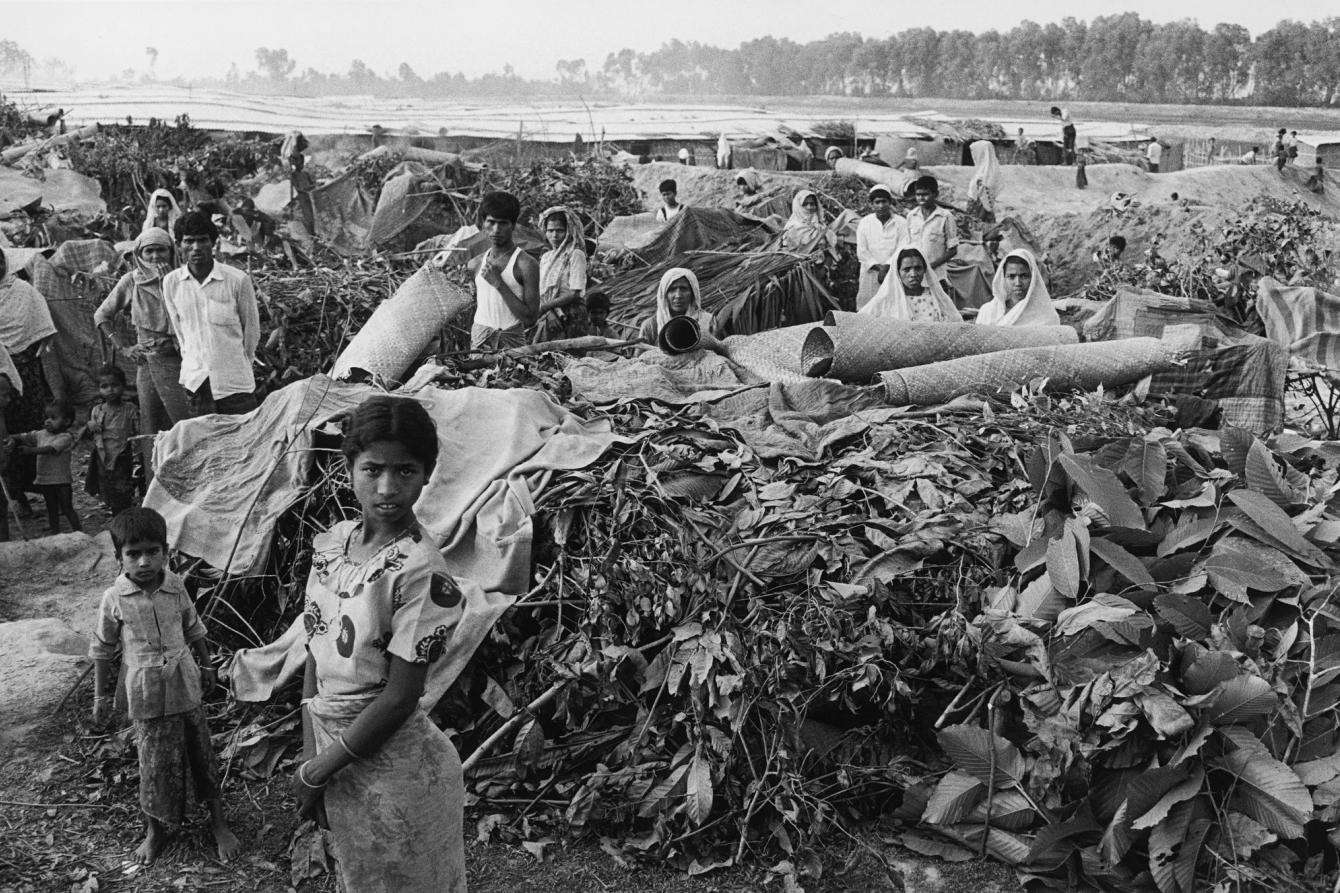
For the Rohingya, the exodus represented far more than temporary movement across a border. It demonstrated that the progressive destruction of political recognition after 1962 had reached a new stage. A community whose representatives had sat in parliament and government only a generation earlier was now fleeing the country in hundreds of thousands while the state questioned whether those people belonged to Burma at all.
From Village Flight to Mass Exodus
The movement did not begin everywhere simultaneously. As described in the preceding articles, reports of arrests, searches, intimidation and violence spread between Rohingya communities. Families heard what had happened in neighbouring areas and increasingly left before the operation reached their own homes. Fear therefore travelled alongside the military operation and helped transform localized flight into a mass movement.
By May 1978, Human Rights Watch records that more than 200,000 Rohingya had fled into Bangladesh. Contemporary UNHCR records describe approximately 200,000 people from Arakan crossing the border between March and July 1978. Although different sources provide somewhat different totals, the scale of the displacement is not seriously disputed.
Some later sources and Rohingya accounts use higher estimates, including approximately 250,000 or more. Rohipedia should preserve such figures when properly attributed, but “more than 200,000” provides the strongest conservative formulation supported by multiple independent sources.
Leaving Homes, Land and Possessions
For Rohingya families, crossing into Bangladesh meant abandoning the material foundations of life in Arakan. Houses, agricultural fields, cattle, fishing equipment, stored food and other possessions could not simply be carried across the frontier. Families fleeing rapidly took what they could and left much of the rest behind.
The loss was particularly serious for an overwhelmingly rural population whose livelihood depended upon access to land. Even if refugees later returned, physical return across the border did not automatically restore property, documentation or the economic position they had possessed before flight. Human Rights Watch later noted that many returnees remained landless and without documentation.
This is why the Nagamin exodus must be understood as more than movement of people. Mass flight could alter property ownership, weaken communities and make displaced families more dependent upon whatever conditions the state imposed upon their eventual return.
Crossing the Naf River
For many refugees from Maungdaw, the Naf River became the final barrier between persecution in Burma and refuge in Bangladesh. Families gathered near crossing points and travelled by whatever means were available. Others reached Bangladesh through land routes farther south or north.
The geography carried a painful historical memory. Rohingya and other Arakanese Muslims had fled toward Bengal during the catastrophe of 1942. In 1978 another generation was again escaping westward, but the political circumstances were fundamentally different. This time Burma was not experiencing the collapse of government during a world war. Rohingya were fleeing an operation conducted by the military and immigration institutions of the Burmese state.
For the longer history of Rohingya persecution, that difference is crucial. The state had moved from failing to protect the Rohingya during earlier communal catastrophe toward becoming the institution whose actions were producing mass flight.
Refugees Arrive in Bangladesh
Bangladesh was itself a young and economically fragile country in 1978. Independence had been achieved only seven years earlier, and the sudden arrival of approximately 200,000 refugees placed enormous pressure on the border region.
Contemporary UNHCR records state that Bangladesh received approximately 200,000 people from Arakan during 1978. The Bangladeshi government initially attempted to respond but soon requested international assistance. The United Nations Secretary-General designated the High Commissioner for Refugees to coordinate the international response.
Human Rights Watch similarly records that the Bangladesh government and the International Committee of the Red Cross initially supplied emergency relief but were rapidly overwhelmed. International assistance became necessary, and refugee camps were established along the border.
The refugee crisis had therefore become international.
Thirteen Refugee Camps
Human Rights Watch records that thirteen camps were established along the Bangladesh–Burma border after international assistance was requested. These camps became temporary homes for a population that had left villages, farms and communities in northern Arakan.
UNHCR's contemporary annual reporting describes approximately 200,000 arrivals between March and July and an international appeal of more than US$15 million for emergency assistance. Food, medical care, water and sanitation became urgent priorities. UN agencies, the Red Cross and voluntary organizations participated in the response.
The establishment of large refugee camps gave physical form to what Nagamin had produced. The dispute over whether Rohingya belonged in Burma was no longer confined to government documents or immigration offices. Entire communities were now living outside the country.
Abid Bahar Encounters the Refugees
Dr. Abid Bahar's testimony provides a Rohingya-associated eyewitness perspective on the scale of the crisis. Bahar later recalled that while teaching at the University of Chittagong in 1978, news spread that approximately 200,000 Rohingya had entered southern Bangladesh. He travelled with students to the refugee area at Ukhia.
What he encountered was an enormous camp population. Bahar described seeing what he called a “sea of tents” accommodating refugees. He interviewed people about why they had fled Burma and, as discussed in Part IV-C, recalled refugees producing National Registration Certificates when he questioned them about the government's allegation that they were illegal immigrants.
His testimony connects two aspects of the Nagamin crisis that should not be separated: the enormous physical scale of the refugee population and the refugees' insistence that they were not foreigners voluntarily returning to Bangladesh.
Burma's Explanation of the Exodus
The Burmese government interpreted the mass flight very differently. Authorities argued that Nagamin was identifying illegal immigrants and treated the departure of large numbers of people as evidence that those people feared exposure as foreigners.
For the Rohingya, this explanation reversed cause and consequence. Refugees maintained that they had fled because military and immigration operations had become abusive and frightening. Human Rights Watch later recorded allegations of forced eviction, army brutality, rape and murder accompanying the exodus.
The government's reasoning nevertheless became politically powerful. Flight itself could be transformed into evidence against the refugees: because they crossed into Bangladesh, their departure could be cited as proof that Bangladesh was where they really belonged.
For Rohingya historical memory, this was one of the most dangerous features of the crisis.
Refugees, Not Returning Immigrants
The behaviour of the refugees themselves challenges the claim that they were simply foreigners returning home. Refugees described Burma as the country from which they had been expelled. Some carried Burmese-issued documents. They demanded recognition of their right to return, and the eventual negotiations between Bangladesh and Burma centred upon their repatriation to Arakan.
The subsequent willingness of Burma to accept large numbers back also complicates any simple assertion that the entire refugee population consisted of illegal Bangladeshi immigrants. UNHCR records that the governments of Bangladesh and Burma reached an agreement on 9 July 1978 providing for repatriation of the approximately 200,000 people who had crossed from Arakan.
The political meaning of that agreement will be examined in detail in Part IV-G. At this stage, its significance is straightforward: the people who had fled were not simply absorbed into Bangladesh as returning nationals. Their return to Burma became the subject of an international refugee and repatriation process.
Conditions Begin to Deteriorate
The camps were overcrowded and humanitarian needs were enormous. Contemporary UNHCR reporting identifies serious problems involving nutrition, sanitation and health. International agencies provided food, medical assistance, water infrastructure and special feeding programmes for vulnerable refugees.
These conditions would become increasingly important because the refugee camps themselves eventually became part of the pressure surrounding repatriation. Later human-rights research concluded that Bangladesh reduced food assistance in an effort to compel refugees to return, with devastating consequences. HRW has reported thousands of deaths from starvation and disease during this period.
Those events deserve separate treatment. They should not be compressed into the story of the initial flight because they raise another difficult question: whether refugees who had escaped Nagamin were subsequently able to make genuinely voluntary decisions about returning to Burma.
The First Great Rohingya Refugee Crisis of Military Rule
The 1978 exodus established a pattern that would recur with devastating regularity. State pressure intensified in northern Arakan. Rohingya civilians fled toward Bangladesh. A humanitarian emergency developed across the border. International agencies intervened.
Negotiations began over repatriation. Many refugees eventually returned without the underlying question of their political and legal status being resolved. The same broad pattern would appear again after the military operations of 1991–1992, and on a vastly larger scale after the atrocities of 2017.
For Rohingya historical memory, 1978 therefore became more than an isolated refugee crisis. It became evidence that mass expulsion could occur without resolving the policies and narratives that had produced it.
Mass Expulsion and the Genocide History
Within the Rohingya understanding of a long or slow genocidal process, Nagamin represents a major escalation because it demonstrated the state's capacity to remove a substantial part of the population from its homeland in a very short period.
The process that preceded the exodus had developed over years. Political representation had disappeared after 1962. Institutional recognition had contracted. The Mayu Frontier Administration had been abolished. Rohingya identity was increasingly questioned, and citizenship scrutiny placed the burden upon individual Rohingya to prove that they were not foreigners.
In 1978, those developments produced a mass physical consequence: more than 200,000 Rohingya were outside Burma.
This does not by itself establish the legal crime of genocide in 1978. But in the historical sequence examined by this series, Nagamin marks an important transition from political and institutional exclusion toward large-scale physical removal of the population.
Displacement Without Resolution
The international response addressed the immediate humanitarian emergency, but it did not resolve the fundamental question that had produced the crisis. Were Rohingya members of Burma's political community, or foreigners whose presence could continually be subjected to immigration scrutiny?
Nagamin had demonstrated what could happen when the state answered that question through military and immigration operations. Yet the refugees' eventual return would not restore the political rights that had disappeared after 1962, nor would it settle their citizenship securely.
Instead, the crisis would move into another phase. Refugees who had fled persecution now faced overcrowded camps, disease, hunger and mounting pressure to return. Bangladesh wanted the enormous refugee population removed from its territory. Burma eventually agreed to accept returnees. International agencies became involved in the process.
For Rohingya, the question was no longer only why they had fled. It became whether they could safely return to the same state that had questioned their right to belong there. The next article examines the refugee camps themselves, including Abid Bahar's eyewitness observations and other testimony concerning the conditions faced by Rohingya after reaching Bangladesh.