Part IV — Operation Nagamin (Dragon King), 1978
Part IV-G: International Pressure, the 1978 Repatriation Agreement and the Question of Forced Return
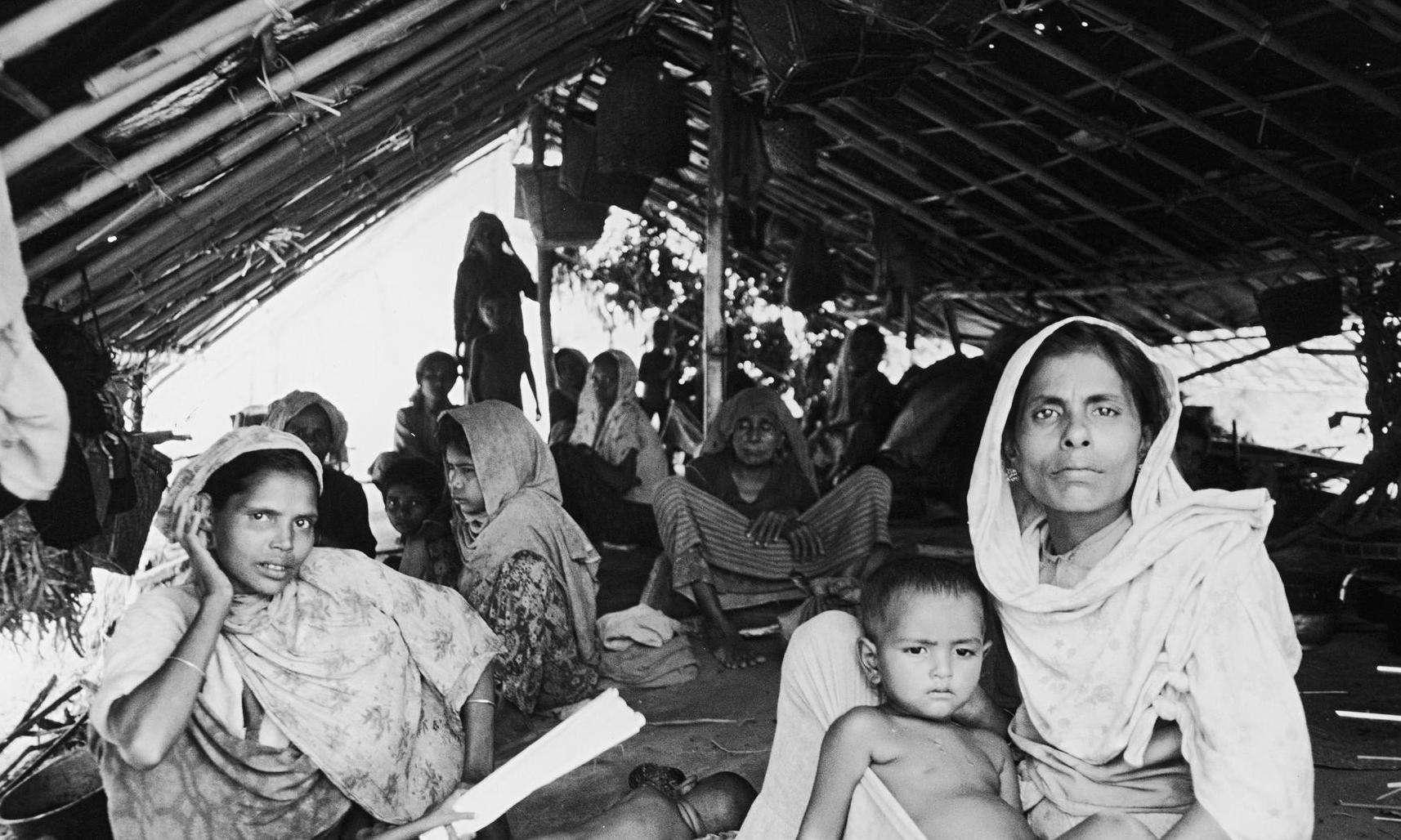
For the Rohingya, the negotiations that followed contained a fundamental contradiction. Burma had questioned their right to belong, yet international pressure was now compelling the same government to negotiate their return. Bangladesh wanted the refugees removed from its territory, while Rohingya feared returning without guarantees that the persecution associated with Nagamin would not resume. The resulting repatriation was officially described as voluntary, but the conditions under which refugees made that decision raise serious questions about how freely many were actually able to choose.
Bangladesh Presses Burma to Accept the Refugees
Bangladesh did not accept Burma's argument that the refugees were simply Bangladeshi nationals returning home. The sudden arrival of approximately 200,000 people created an enormous political and humanitarian burden for a country that had itself emerged from war and independence only seven years earlier.
Dhaka therefore pressed Rangoon to accept the refugees back. The dispute quickly became diplomatic as well as humanitarian. Bangladesh sought international support, while the growing visibility of the refugee camps made it increasingly difficult for the Burmese government to treat the crisis as a purely internal immigration matter.
For the Rohingya perspective, Bangladesh's position contained an important implication: the country to which Burma claimed the Rohingya belonged did not accept them as its own returning population. Bangladesh instead demanded their repatriation to Burma.
International Attention Changes the Crisis
The involvement of the United Nations added further pressure. Bangladesh requested international humanitarian assistance, and UNHCR became centrally involved in relief operations. Food, water, sanitation, medical assistance and shelter had to be organized for a refugee population of extraordinary size.
International involvement also meant that Burma's response was now subject to greater scrutiny. The refugee question could no longer be addressed solely through military and immigration operations inside northern Arakan. The consequences of Nagamin were visible across an international border and required negotiations between governments. Humanitarian intervention did not resolve the political question of Rohingya citizenship. But it helped create conditions in which Burma eventually agreed to receive the refugees back.
The Agreement of 9 July 1978
On 9 July 1978, the governments of Bangladesh and Burma reached an agreement concerning the return of the refugees. Contemporary UNHCR reporting states that the agreement provided for the repatriation of those wishing to return to Burma.
UNHCR subsequently became involved in facilitating the process. Burma requested assistance for repatriation and reintegration, and UNHCR missions travelled to the country to assess humanitarian needs. The agency provided supplies intended to assist returnees and support the return operation. On paper, therefore, an international framework for voluntary repatriation had been created. For Rohingya refugees, however, signing an agreement between governments did not answer the most important question: would returning to Burma actually be safe?
Why Refugees Were Afraid to Return
The refugees had fled only months earlier. They carried memories of military searches, arrests, intimidation and violence. Some possessed NRCs and other Burmese documents yet had still found themselves treated as suspected foreigners. Many had abandoned houses, agricultural land and possessions. Their reluctance to return was therefore understandable.A diplomatic agreement could provide transportation across the border, but it could not by itself restore trust in the Burmese state. Refugees wanted assurances that they would not again be subjected to the same treatment that had caused them to flee.
According to later detailed reporting on the relief operation, resistance to repatriation was initially strong. Refugees feared renewed persecution and did not believe that adequate guarantees had been provided for their security after return. This resistance created another conflict—this time between the refugees and the government of Bangladesh.
Bangladesh Wanted the Refugees to Leave
Bangladesh had accepted an enormous humanitarian burden, but it had no intention of allowing the Rohingya refugee population to become permanent. The government therefore strongly favoured rapid repatriation. This objective increasingly affected conditions inside the camps. A detailed 1979 account of the relief operation by Alan C. Lindquist, who had headed UNHCR's sub-office in Cox's Bazar, records discussions among Bangladeshi officials and international agencies concerning food rations and refugee return.
Lindquist's account is deeply troubling because it suggests that humanitarian conditions were understood politically. Refugees who became too secure or comfortable in Bangladesh might be less willing to return to Burma. Food consequently became connected to repatriation policy.
Food as Pressure
According to Lindquist's account, Bangladesh's Secretary of the Ministry of Relief and Rehabilitation expressed the government's position bluntly during a July 1978 coordination meeting: refugees should not become so comfortable that they would refuse to return to Burma.
Later in the year, officials discussed reducing food rations as a means of encouraging repatriation. UN representatives resisted an explicit reduction because nutrition specialists warned that the existing ration already provided little margin for survival. Nevertheless, serious interruptions and shortages subsequently affected food deliveries.
The importance of this evidence is profound. Refugees who had fled persecution were dependent upon the camps for survival. If food availability was deliberately restricted or allowed to deteriorate in order to encourage departure, the resulting decision to return could no longer be understood simply as a free choice between remaining safely in Bangladesh and voluntarily returning to Burma.
Refugees Were Prevented From Supporting Themselves
Pressure was intensified because refugees had limited ability to survive independently. Lindquist's account states that refugees were increasingly restricted to the camps. Men who had previously found occasional day labour outside could no longer rely upon those earnings to supplement inadequate food supplies. Women who had collected firewood or edible plants also faced tighter restrictions.
This increased dependence upon official food distribution. For Rohingya families, the consequences were severe. They could not freely establish livelihoods in Bangladesh, yet remaining in the camps meant depending upon a relief system increasingly shaped by the political objective of repatriation. Their choices narrowed. Return to Burma. Or remain in conditions that were becoming progressively harder to survive.
Hunger, Malnutrition and Death
The humanitarian consequences became catastrophic. Contemporary UNHCR reporting acknowledged serious problems involving nutrition, sanitation and health in the overcrowded camps. Feeding programmes were established for children, elderly people, pregnant women and nursing mothers, while medical programmes attempted to treat severely malnourished refugees.
Later analysis of the relief operation reveals how serious the crisis became. By December 1978, between 80 and 85 refugees were reportedly dying every day, many of them children. Malnutrition weakened the population and increased vulnerability to disease. By the end of March 1979, Lindquist's figures indicated that more than 11,900 refugees had died in the camps while more than 107,000 had returned to Burma. Human Rights Watch has subsequently cited this episode as an example of food being used to pressure Rohingya refugees into repatriation.
These deaths form part of the human cost of Nagamin even though they occurred outside Burma. The refugees would not have been living in those camps without the mass displacement produced by the operation.
Voluntary on Paper, Coercive in Practice?
This creates one of the most difficult questions in the history of the 1978 crisis. UNHCR's contemporary official record described the process as voluntary repatriation. The July agreement formally provided for the return of those wishing to go back, and UNHCR assisted with the process.
But voluntariness cannot be judged only from the wording of an agreement. A refugee deciding between safe residence abroad and return to a dangerous homeland possesses a meaningful choice. A refugee deciding between return and a camp where food is inadequate, children are dying and alternative livelihoods are prohibited faces a very different decision.
For many Rohingya, therefore, the question is not whether they physically crossed the border back into Burma. The question is whether the conditions under which they agreed to do so allowed a genuinely free choice. The historical evidence gives strong reason to question that assumption.
As Conditions Worsened, Return Accelerated
The timing is significant. Only relatively small numbers initially returned. UNHCR records that more than 36,000 people had repatriated by the end of 1978. The pace then accelerated dramatically during 1979. Lindquist's account similarly records that the return rate increased as conditions in the camps became increasingly desperate. From mid-November 1978 onward, at least 2,000 people were reportedly returning every three days—the maximum rate contemplated under the bilateral arrangement.
The relationship does not prove that every returnee was coerced. Some Rohingya undoubtedly wanted to return to their homes in Arakan regardless of camp conditions. But the correlation between worsening conditions and accelerating repatriation is historically significant.
The Last Refugees Return
The repatriation continued throughout 1979. UNHCR records that the rate increased rapidly during the first months of that year. Food and logistical assistance continued for the shrinking refugee population, while returnees received assistance after crossing back into Burma.
The process was ultimately completed on 29 December 1979, when UNHCR recorded the last returnee crossing back into Burma. Thus, within less than two years of Nagamin producing the mass exodus, the overwhelming majority of the refugee population had returned. The refugee camps largely disappeared. The underlying political problem did not.
Burma's Acceptance of the Refugees
The mass repatriation also remains important to the documentary dispute examined in Part IV-F. Burma had justified Nagamin partly through allegations of illegal immigration. Yet after international negotiations, the government agreed to accept approximately 200,000 people back.
This does not automatically prove that every returnee possessed citizenship. But it seriously complicates any simple narrative in which the refugee population consisted overwhelmingly of Bangladeshis discovered living illegally in Burma.
The people were returned to Arakan. They were not permanently resettled in Bangladesh. Their repatriation was negotiated with Burma. For the Rohingya perspective, these facts support the argument that the 1978 crisis concerned the expulsion of a population from its homeland rather than the routine removal of foreigners.
Return Did Not Restore Citizenship
The greatest failure of the repatriation process was what it did not resolve. The refugees could physically return to Burma without regaining the political position the Rohingya had possessed before military rule. Parliamentary representation was not restored. The Mayu Frontier Administration was not restored. Rohingya-language state broadcasting was not restored. The state's growing suspicion toward Rohingya citizenship was not reversed. Return therefore solved the location of the refugees without solving their legal and political vulnerability. This distinction would prove devastating.
Repatriation Without a Political Solution
International diplomacy succeeded in reducing the immediate refugee population in Bangladesh. From a humanitarian and diplomatic perspective, the operation could therefore be presented as a successful mass repatriation.
From the Rohingya perspective, the result was much less reassuring. The people returned to the same military state that had questioned their belonging. The ideology portraying them as immigrants remained. Their documentation remained vulnerable. Their political institutions remained dismantled. The structural conditions that had made Nagamin possible survived the repatriation. Only four years later, those conditions would become embedded within a far more restrictive citizenship regime.
Nagamin's Most Dangerous Lesson
The events of 1978–1979 revealed a pattern that would recur repeatedly in Rohingya history. State persecution could drive Rohingya across an international border. The resulting humanitarian crisis could generate international attention. Neighbouring countries could demand repatriation. Myanmar could agree to receive refugees back. International agencies could facilitate return. And yet the political conditions that produced the displacement could remain largely unchanged.
The refugees would be returned without the fundamental dispute over their citizenship and belonging being resolved. This pattern would return after the 1991–1992 exodus and would again dominate international discussion following the mass atrocities of 2017.
Why IV-G Matters to the Genocide History
Within the Rohingya understanding of a long genocidal process, the 1978 repatriation demonstrates why physical return alone cannot reverse persecution. Genocide and mass persecution concern more than where a population happens to be physically located. They concern whether that population can exist securely, maintain its identity, exercise rights and remain in its homeland without repeated destruction or expulsion.
Nagamin had demonstrated that the Rohingya could be driven out. The repatriation demonstrated that they could be brought back without restoring the protections that might prevent the same process from happening again. That failure is essential to understanding what came next.
Instead of using the return to restore Rohingya citizenship securely, the military government continued moving in the opposite direction. The question of who belonged to Burma became increasingly tied to ethnic ancestry and the ideology of officially recognized national races.
In 1982, Ne Win's government enacted a new citizenship law. For the Rohingya, that law would transform the insecurity exposed by Nagamin into a much deeper system of legal exclusion.
Before reaching the 1982 law, however, one final Nagamin article is necessary. It examines what Operation Nagamin left behind: the destruction of political security, the precedent of mass expulsion, the weakening of documentation and the lessons the Burmese state—and the Rohingya—carried from 1978 into the next stage of persecution.
Continue reading → Part IV-H: The Legacy of Nagamin — From Mass Expulsion Toward Legal Exclusion