Chapter 11. From Removal to Segregation: State Policy, Rakhine Nationalism and the Confinement of the Rohingya
The destruction of Rohingya and other Muslim communities during 2012 did not end when the fires subsided. What followed was another decisive stage in the persecution of the Rohingya: mass displacement was transformed into an increasingly permanent system of segregation and confinement. The origins of that system cannot be understood simply as an improvised humanitarian response to communal disorder. Months before the October attacks, President Thein Sein's government had publicly advanced the idea that Rohingya whom it regarded as foreigners should either be placed under the responsibility of the United Nations refugee agency or removed to third countries. At the same time, Rakhine nationalist political, religious and community organizations were openly demanding separation and removal of the Rohingya. The convergence between these positions is central to understanding what happened after the violence.
Thein Sein's Proposal for the Removal of the Rohingya
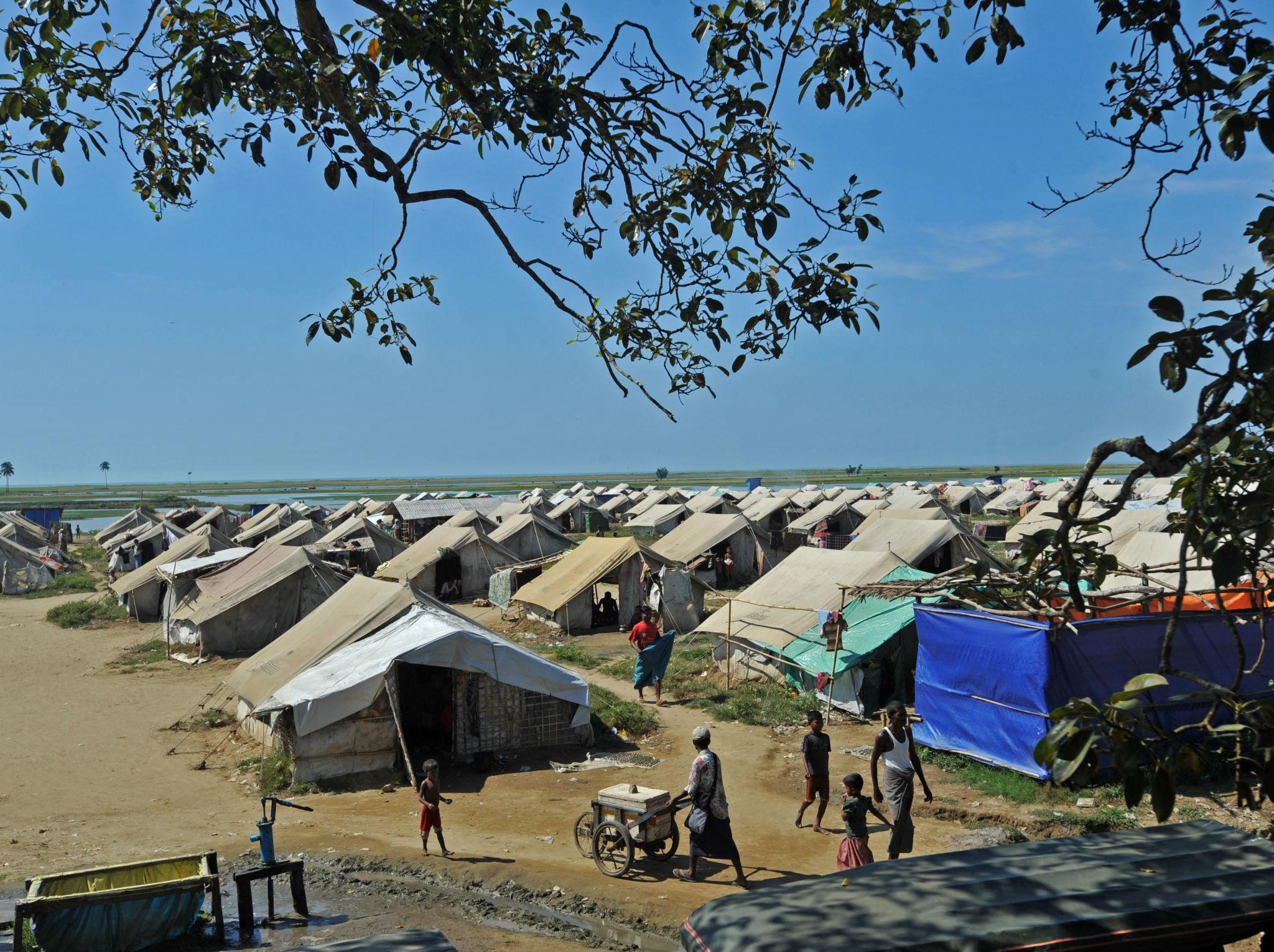
For the Rohingya, the significance of this proposal went far beyond the immediate humanitarian crisis. The country's president was not publicly discussing how displaced Rohingya could safely return to their homes, how their citizenship rights could be restored, or how destroyed communities could be rebuilt. Instead, the discussion centered on removing them from Myanmar or concentrating them under international supervision. This transformed a long-standing ideology of exclusion into an openly articulated proposal at the highest level of government.
The timing is particularly important. Thein Sein's proposal came in July 2012, between the June violence and the much larger coordinated attacks of October. It therefore preceded the destruction of many Muslim communities discussed in the preceding chapters. Human Rights Watch later documented that during these intervening months Rakhine political organizations, monks' associations and community groups circulated statements and pamphlets advocating removal or separation of Muslims and that extensive organization preceded the October attacks.
National Policy and Rakhine Nationalist Demands Converge
The central government's position developed alongside an increasingly organized Rakhine nationalist campaign. The Rakhine Nationalities Development Party (RNDP), influential monks and other organizations promoted the idea that Rohingya should be physically separated from Buddhist communities. Public meetings, statements and pamphlets rejected Rohingya identity and portrayed their continued presence as a threat. Human Rights Watch documented that some of these materials went considerably further, advocating their removal from Arakan or Myanmar altogether.
These developments make it inadequate to describe the later events solely as an uncontrolled eruption of hostility between two neighboring communities. There were certainly local tensions, individual acts of violence and casualties among different communities during the initial June disturbances. But by the months preceding the October attacks, an organized political movement was openly advocating policies directed against an entire Muslim population.
At the same time, the central government was not moving toward restoring Rohingya rights. On 31 July 2012, Home Affairs Minister Lieutenant-General Ko Ko told Myanmar's parliament that authorities were tightening regulations governing Rohingya movement, births and deaths, migration, marriage, religious buildings, land ownership and construction. Later documentation obtained by Fortify Rights demonstrated that restrictions affecting movement, marriage, childbirth and other fundamental aspects of Rohingya life were not simply informal discrimination by individual local officials. State and central-government authorities were involved in their formulation and implementation.
The historical importance lies in this convergence. Rakhine nationalist organizations demanded exclusion and separation from below, while the national government continued to deny Rohingya membership in the political community and strengthened administrative mechanisms capable of restricting their lives from above. This does not by itself establish a secret agreement between every actor involved. It does, however, demonstrate that the ideology of separation was no longer confined to extremist rhetoric: exclusion had corresponding expressions in government policy.
From the October Attacks to Physical Separation
The October 2012 attacks then radically altered the geography of Muslim life across central Arakan. As documented in the preceding chapters, Rohingya and Kaman Muslim neighborhoods and villages were attacked in numerous townships, including Mrauk-U, Minbya, Myebon, Pauktaw and Kyaukphyu. Human Rights Watch concluded that the October violence had developed into a coordinated campaign intended to forcibly relocate or remove Muslims and documented organization by political and religious actors as well as instances in which state security forces failed to intervene or actively assisted attackers.
The consequence was not merely the destruction of buildings. Communities that had existed for generations disappeared from towns and mixed residential areas. Survivors were driven toward beaches, fields and makeshift displacement sites. People who had lost their houses were subsequently prevented from freely returning to many of the places from which they had been expelled.
This is where destruction and segregation became interconnected. Burning a Muslim quarter could have been followed by reconstruction and return. Instead, displacement increasingly became permanent. The geography created by violence was preserved through administrative restrictions, checkpoints, security barriers and controls over movement.
The result was that what violence had accomplished physically was increasingly maintained institutionally.
Camps That Became a System of Confinement
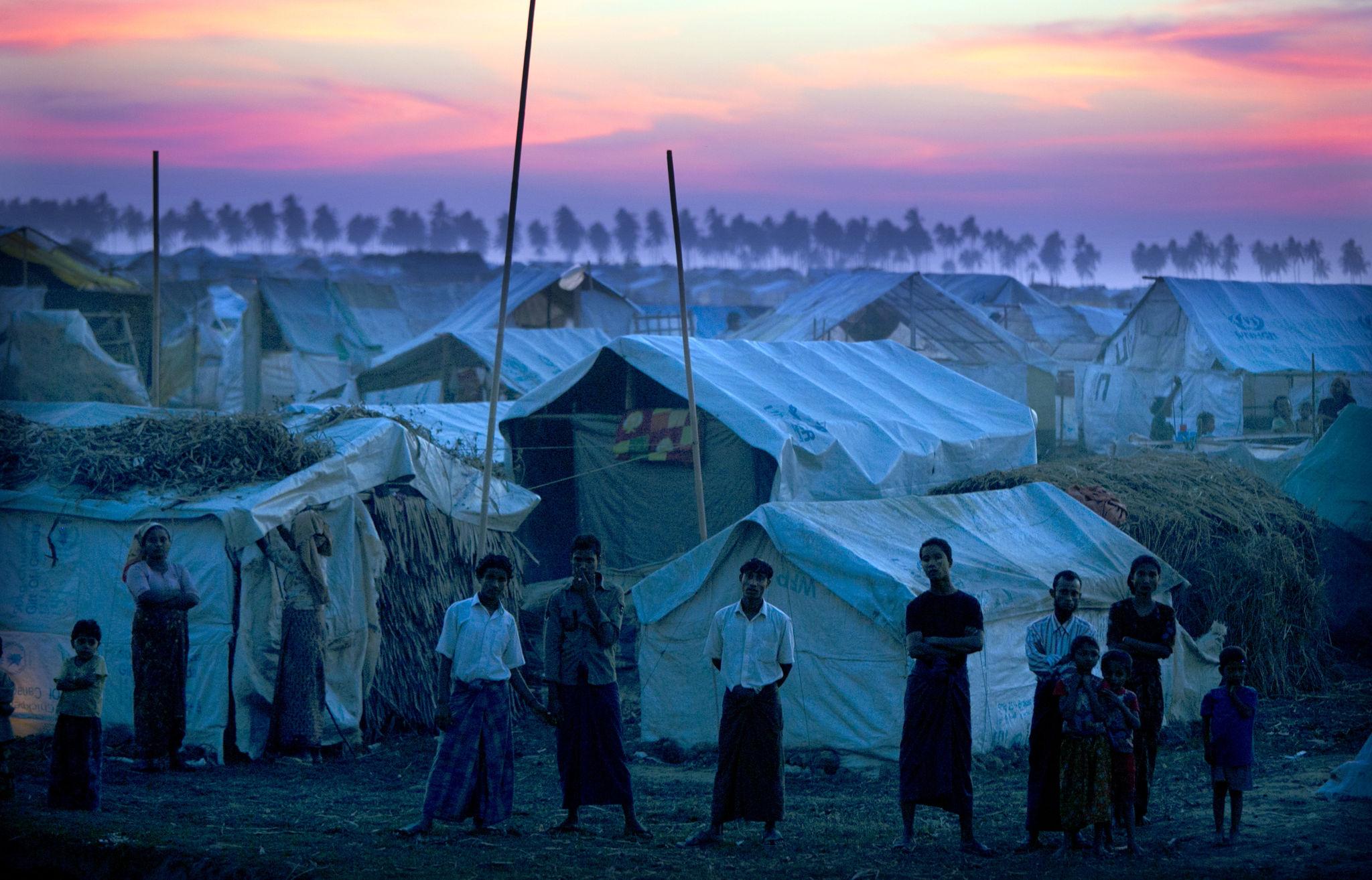
Rohingya movement outside these areas became subject to checkpoints, permission requirements, police controls and other restrictions. Access to hospitals, schools, universities, markets and employment was severely curtailed. Families who had previously participated in the economic and social life of Sittwe and other towns found themselves physically excluded from them.
Human Rights Watch later documented how this temporary-looking arrangement hardened into long-term detention. More than 130,000 Rohingya and other Muslims remained confined in central Arakan years after the violence, with the organization describing the system as effectively an open-air detention regime. The camps therefore became something fundamentally different from ordinary displacement shelters. They helped institutionalize the separation of Rohingya from the surrounding population.For Rohingya survivors, this distinction was crucial. They had not voluntarily abandoned their neighborhoods and subsequently chosen to live separately. Many had been driven from their homes by violence and were then denied meaningful freedom to return. The state subsequently regulated where they could live and how far they could travel.
The Political Meaning of Segregation
From the Rohingya historical perspective, the sequence of 2012 therefore has to be examined as a connected process rather than as isolated episodes. First came the June violence and mass displacement. Then came the president's proposal that Rohingya regarded by his government as foreigners should be placed under UNHCR responsibility and ultimately transferred to third countries. During the following months, nationalist organizations intensified demands for separation and removal. Government authorities simultaneously maintained and tightened discriminatory controls. October brought a broader and more organized campaign of destruction. Finally, the resulting displacement was consolidated through physical segregation and restrictions on return and movement.
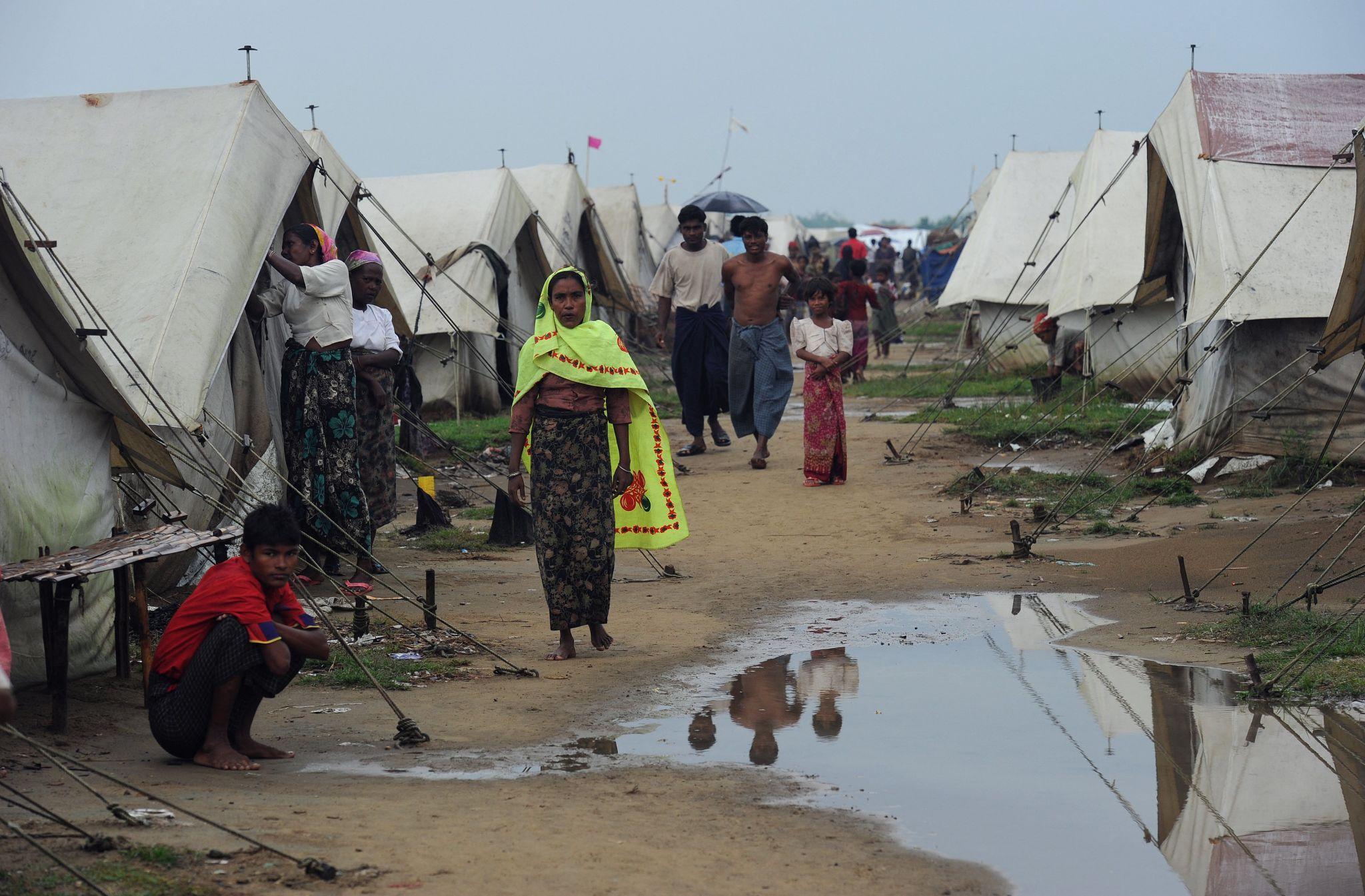
Seen in this sequence, the post-2012 camps were not merely places where survivors happened to seek shelter. They became part of a political and administrative structure that prevented large numbers of Rohingya from resuming the lives they had lived before the violence.
From Exclusion to an Institutionalized System
The year 2012 therefore represented more than another episode of mass violence in the long persecution of the Rohingya. It altered the physical and political landscape of Arakan. Rohingya communities were destroyed, displaced populations were separated from their former towns, and emergency measures gradually became durable structures of control.
This system also built upon policies that predated 2012. Restrictions on Rohingya movement, marriage, documentation, land and family life had developed over decades, as earlier chapters of this history have shown. What changed after 2012 was the scale and geography of confinement. Entire populations in central Arakan were now physically separated from towns in which Muslims had lived for generations.
The destruction of October consequently achieved something that discriminatory legislation alone had not accomplished: it emptied significant Muslim residential areas and created the conditions for their inhabitants to be segregated elsewhere. Government policy then helped preserve that new reality.
For the Rohingya, this is one of the most consequential legacies of 2012. Violence removed communities from their homes; segregation prevented many from returning; restrictions deprived them of ordinary civic and economic life; and the denial of citizenship left them with little legal power to challenge the system imposed upon them.
The transition from burning villages and neighborhoods to camps, checkpoints and movement restrictions therefore marks a crucial stage in the chronology of Rohingya persecution. The violence did not simply produce refugees and internally displaced people. It helped create a geographically segregated Rohingya population whose confinement would continue for years and would form part of the wider system of persecution that preceded the catastrophic military operations of 2016 and 2017.