Chapter 13. The End of 2012: A Rohingya Society Transformed
By December 2012, the Rohingya had reached the end of a year that fundamentally altered their position in Arakan and Myanmar. The significance of 2012 cannot be measured only by those killed, the villages and neighbourhoods destroyed, or the homes abandoned during the violence. By the end of the year, the physical, economic and social geography of Rohingya life had been profoundly changed. Approximately 140,000 people, overwhelmingly Rohingya and other Muslims, had been displaced during the crisis. Large numbers were living in camps and makeshift settlements, separated from towns, markets, schools, hospitals, farmland and livelihoods that had sustained their communities before the violence.
For the Rohingya, therefore, 2012 did not end with recovery. Families who had survived the violence faced a second crisis: how to live after losing not only houses but the communities around those houses. Homes could represent generations of family history; neighbourhoods contained mosques, schools, shops, relatives, customers and social networks. Farmers depended upon access to land, fishermen upon access to waterways and markets, and traders upon the ability to travel. Displacement disrupted all of these relationships simultaneously. The humanitarian emergency that followed was inseparable from this destruction of ordinary economic and community life.
A Population Displaced on an Enormous Scale
By the end of 2012, the displacement crisis had reached an extraordinary scale. Contemporary humanitarian assessments placed the displaced population at roughly 140,000 people, with Rohingya and other Muslims constituting the overwhelming majority. Some were accommodated in recognized displacement camps while others lived in informal settlements under extremely precarious conditions. The numbers themselves, however, reveal only part of what had happened. Every displaced family represented a connection to a former village, neighbourhood, property or livelihood that had been broken.
The concentration of such a large population in displacement sites also changed the geography of Arakan. Areas that had previously contained mixed or substantial Muslim populations became overwhelmingly Buddhist, while displaced Muslims were concentrated elsewhere. This was particularly visible around Sittwe, where thousands of Rohingya who had once lived within or near the town were now living in camps and settlements outside its principal urban areas. By the end of the year, the camps were no longer a minor feature of the emergency. They had become one of the defining realities of Rohingya life in central Arakan.
Sittwe Had Been Transformed
Sittwe provided perhaps the clearest example of the transformation. Before the violence, Muslims constituted a substantial part of the city's population and participated in its commercial and social life. By the closing months of 2012, much of that population had disappeared from the urban landscape. Muslim neighbourhoods had been destroyed or emptied, while large numbers of their former residents were living in displacement areas outside the city. Aung Mingalar remained as one of the few significant Muslim neighbourhoods inside Sittwe, but its increasing isolation demonstrated how dramatically relations within the city had changed.
For Rohingya who had previously lived and worked in Sittwe, this was not simply a change of residence. The city represented access to markets, transportation, hospitals, schools, government institutions and commercial networks connecting communities throughout Arakan. Removal from the urban economy therefore meant losing access to opportunities that could not easily be recreated inside displacement camps. The demographic transformation of Sittwe consequently carried economic and political consequences alongside the physical loss of neighbourhoods.
Displacement Without a Meaningful Return
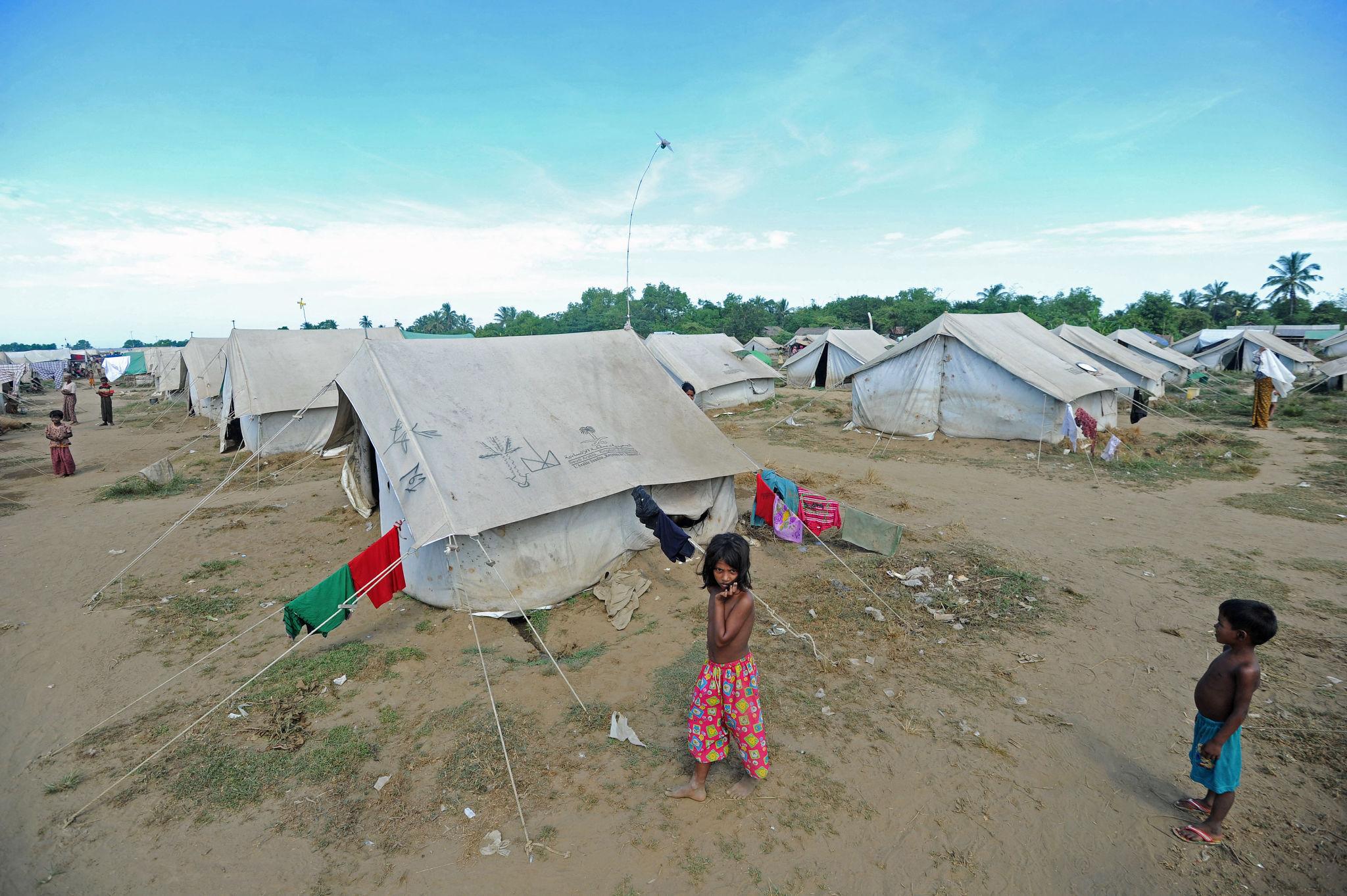
This uncertainty changed the meaning of the camps. Temporary shelter is fundamentally different from a place where a family has no clear prospect of leaving. By December 2012, many Rohingya had survived for months without returning home. Their children were growing up away from former schools, parents had lost normal employment, and families depended increasingly upon humanitarian assistance. The question confronting them was no longer simply how to survive the immediate aftermath of violence, but whether they would ever recover their homes, property and place within the communities from which they had been displaced.
Statelessness Made Dispossession More Dangerous
The Rohingya entered 2012 already facing the consequences of decades of exclusion from citizenship and restrictions imposed upon their daily lives. The year's mass displacement made that existing vulnerability far more dangerous. People who had lost homes and property were attempting to recover them within a political system that already denied most Rohingya secure recognition as citizens. Their ability to demand restitution, reconstruction, freedom of movement or political protection was therefore severely weakened.
For Rohingya survivors, this created a profound contradiction. They regarded Arakan as their homeland and many families had lived there for generations, yet after losing their homes they faced an official and political environment that increasingly questioned their very belonging. The destruction of property was therefore connected to a larger struggle over identity and citizenship. The question was not simply whether destroyed houses would be rebuilt, but whether the Rohingya who had lived in them would be recognized as having the right to return and remain.
Humanitarian Dependency Replaces Economic Independence
By the closing months of the year, humanitarian organizations were confronting severe needs for food, clean water, sanitation, shelter and healthcare. Conditions varied between displacement sites, but overcrowding and inadequate services were widespread concerns. Families who months earlier had supported themselves through farming, fishing, trade, transport, shops and wage labour increasingly depended upon food distributions and humanitarian organizations for basic survival.
For the Rohingya, this dependency represented another profound loss of autonomy. It did not arise because Rohingya communities suddenly lost the ability or willingness to support themselves. Their economic independence had been undermined by displacement and restrictions separating them from land, fishing grounds, businesses, customers and markets. Humanitarian assistance was therefore responding to poverty that had been dramatically intensified by the destruction of livelihoods and restrictions on movement. Aid kept people alive, but it could not replace the freedom to work, travel and rebuild their own economic lives.
The Crisis of Rohingya Identity and Belonging
The events of 2012 also intensified the struggle over Rohingya identity. Rohingya identified themselves as a Muslim ethnic community with deep historical roots in Arakan, while Myanmar authorities generally rejected the name "Rohingya" and increasingly used the term "Bengali." This terminology carried significant political meaning because it suggested that the Rohingya were migrants from Bangladesh rather than a community belonging to Myanmar.
After the violence, this dispute became directly connected to questions of residence, citizenship and return. If Rohingya were portrayed as foreigners, their displacement could be represented as an immigration problem rather than the dispossession of a population living in its homeland. For Rohingya survivors, the contradiction was stark: families had lost houses, land and neighbourhoods in Arakan while simultaneously facing claims that they did not belong there. The struggle over identity therefore became inseparable from the struggle to return home.
Some Rohingya Begin Looking Toward the Sea
The deterioration of conditions also strengthened another development that would become increasingly important in subsequent years: flight from Myanmar by sea. Rohingya had used maritime routes before 2012, but the year's violence, displacement and growing uncertainty created powerful new pressures to leave. For some families, remaining in Arakan appeared to offer a future of camps, restrictions and statelessness, while leaving meant risking dangerous journeys toward Bangladesh, Thailand or Malaysia.
Neither choice represented genuine security. Those who remained faced uncertainty over return and basic rights; those who departed risked exploitation, detention, trafficking, dangerous boats and death at sea. The increasing willingness of Rohingya to undertake such journeys demonstrated the depth of despair produced by the year's events. When families begin considering an uncertain sea voyage safer than remaining in their homeland, displacement has moved beyond an ordinary humanitarian emergency.
Political Reform for Myanmar, Declining Freedom for the Rohingya
The Rohingya crisis unfolded during a period when Myanmar was receiving international praise for political reform. President Thein Sein's government released political prisoners, relaxed aspects of censorship, engaged with the political opposition and improved relations with Western governments. Sanctions were eased and Myanmar was increasingly presented internationally as a country moving away from decades of military dictatorship.
For the Rohingya, however, this national political opening did not bring an equivalent expansion of rights. During the same year that Myanmar's international isolation was diminishing, Rohingya communities experienced mass displacement, increasing segregation and continuing denial of citizenship. This contrast became one of the defining features of the period. Political liberalization for much of Myanmar coexisted with shrinking freedom for one of the country's most vulnerable populations.
What 2012 Had Changed
The persecution of the Rohingya did not begin in 2012. Earlier decades had already brought military operations, mass flight, citizenship exclusion, movement restrictions and other forms of discrimination. What made 2012 historically decisive was the way those older structures became combined with large-scale physical displacement and geographical separation. Statelessness was now accompanied by mass dispossession; restrictions on movement were reinforced by the geography of camps; political exclusion was accompanied by the destruction or emptying of established communities.
The End of 2012
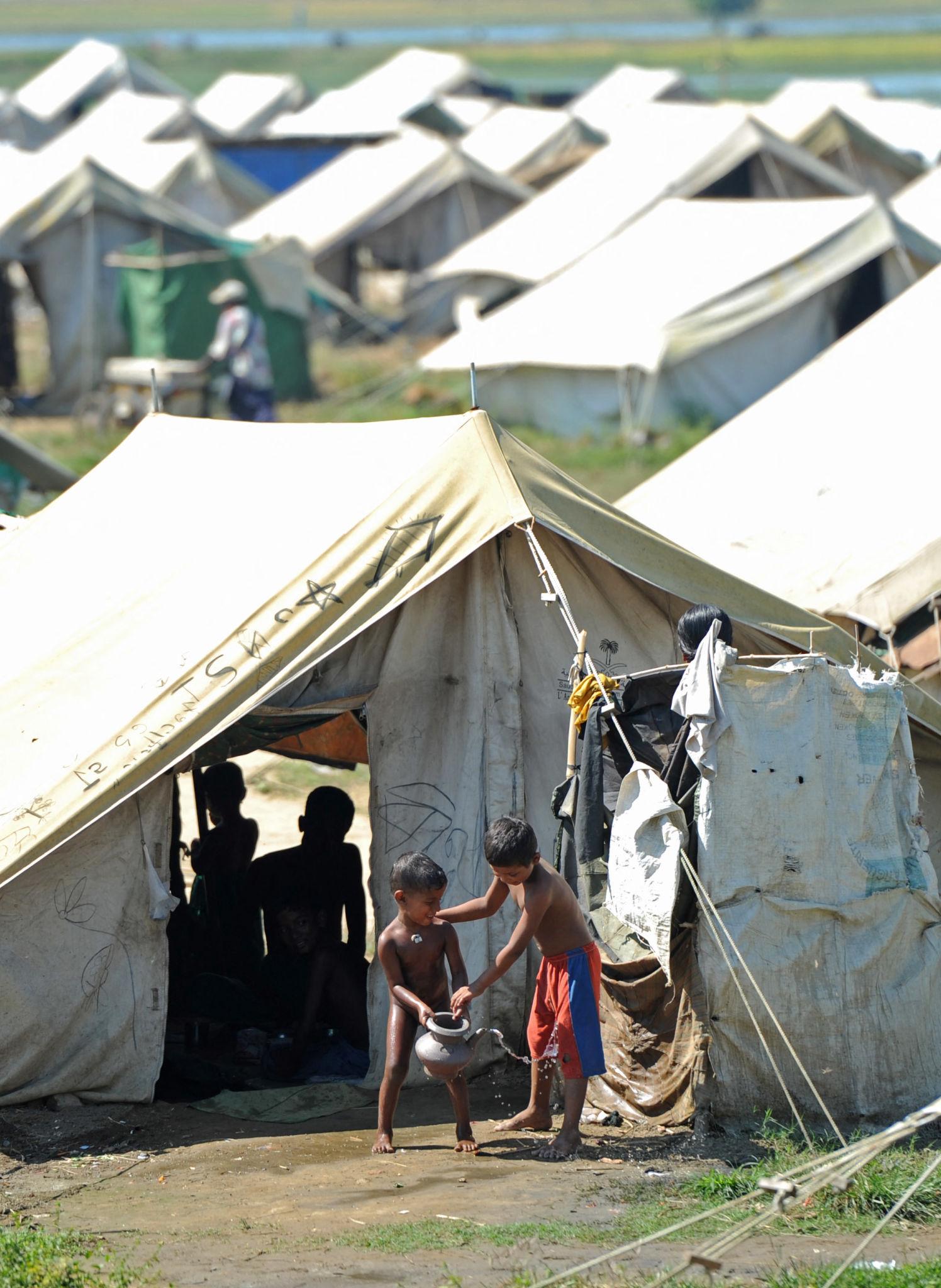
The final weeks of 2012 brought no restoration of the world that had existed before the violence. There was no large-scale return of displaced Rohingya to their former neighbourhoods, no resolution of their citizenship status and no reconstruction of the social and economic relationships destroyed during the year. Instead, displacement and separation were becoming established realities.
At the same time, Buddhist nationalist networks and rhetoric that would become increasingly visible through the 969 movement were beginning to emerge into the national political landscape. Their development belongs to the next stage of this history and should not be projected backward onto events that preceded them. But their appearance at the end of 2012 provides an important bridge between the crisis in Arakan and the wider anti-Muslim mobilization that would become increasingly prominent during 2013.
For the Rohingya, the meaning of the year was already clear. They had entered 2012 as a population subjected to severe discrimination and denial of citizenship. They ended it with approximately 140,000 people displaced, important communities destroyed or emptied, economic independence severely damaged and large numbers living in camps with no clear path home. The violence itself had subsided, but its consequences had become embedded in everyday life.
The fires eventually went out. The displacement did not.