Chapter 2. Trafficking Networks, Captivity and Ransom
A Network Built around Control of People
The trafficking system operating before and during 2015 linked recruiters, vessel crews, camp guards, payment collectors and handlers responsible for onward transfers. The joint investigation by the Human Rights Commission of Malaysia, SUHAKAM, and Fortify Rights later documented crimes committed against Rohingya between 2012 and 2015. Drawing on more than 270 interviews with survivors, witnesses, traffickers, officials and others, it described a transnational criminal syndicate whose operations extended across vessels, border camps and holding houses.
Evidence of coordination appears in UNHCR’s contemporary monitoring. Some passengers reported transfers between as many as six boats. Handlers used coloured plastic wristbands to identify the passengers for whom they expected payment, separating people—including members of the same family—according to those colours upon disembarkation in Thailand. This practice made a person’s assignment within the payment system more important than keeping relatives together.
Recruitment through Abduction
Alongside deceptive recruitment, investigators recorded direct abductions. Human Rights Watch interviewed a thirteen-year-old Rohingya girl who described being seized in front of her parents and threatened with sticks before being forced onto a boat. Another girl, aged sixteen, reported that armed men compelled her and other Rohingya to board. A third account described a woman being taken with her husband and child while travelling to a relative’s home.
These testimonies establish that some victims had made no decision to undertake a maritime journey. Their removal began through force. Children and families could therefore enter the transport network as captives from the outset, before any offshore transfer or demand for money.
Confinement aboard the Boats
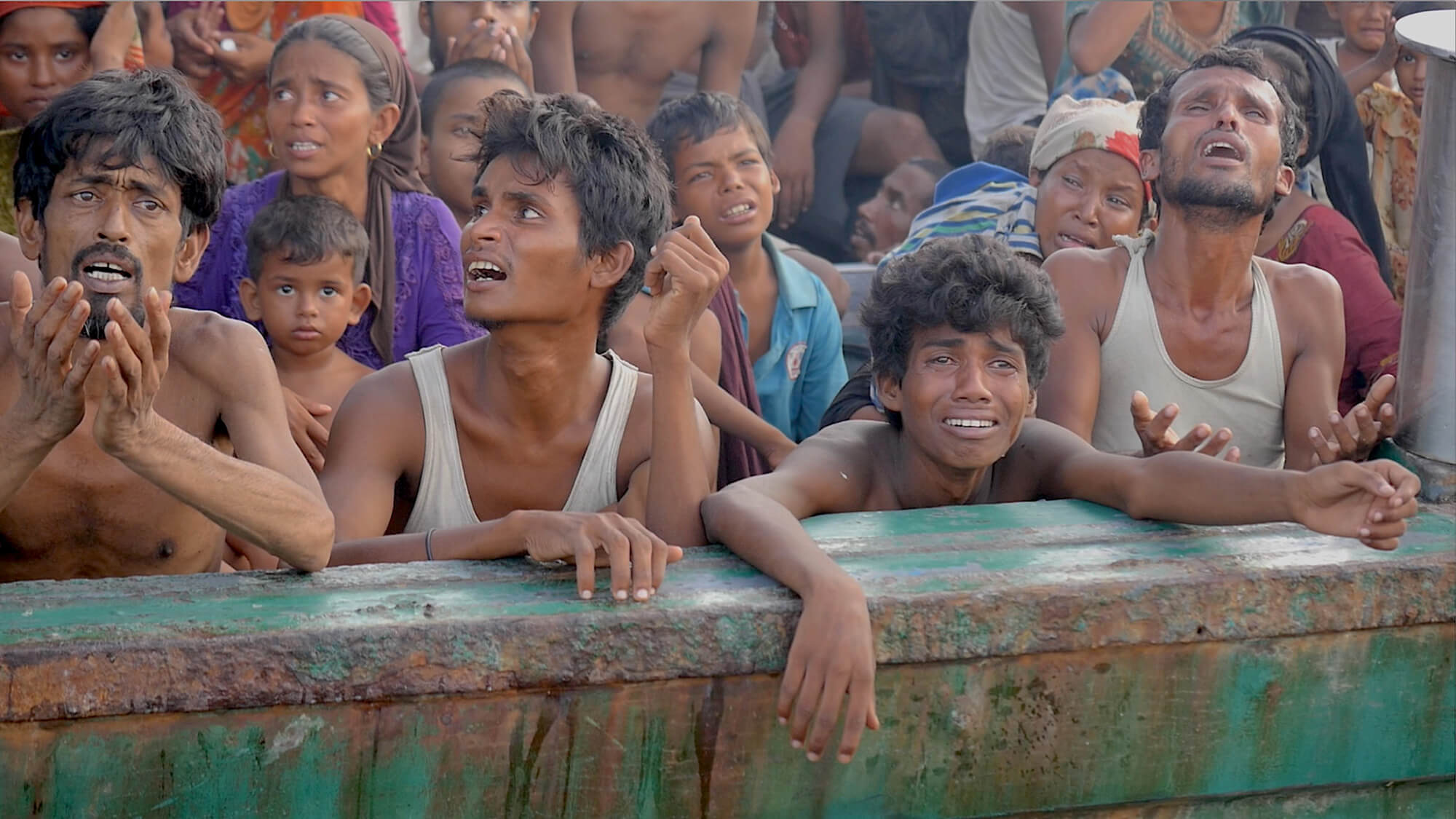
Survivors described vessels arranged to restrict movement and contact. One girl interviewed by Human Rights Watch recalled approximately sixteen people confined in a small room with locked doors. Food and water were passed through an opening. Another described women held below deck, unable to see outside, while additional passengers repeatedly arrived. Such conditions placed basic activities under the crew’s control.
Telephone Calls as Instruments of Extortion
Ransom demands brought relatives into the captivity system from a distance. Amnesty interviewed a fifteen-year-old Rohingya girl whose captors telephoned her father in Kutupalong refugee camp in Bangladesh. They beat her while he listened and demanded 7,500 Malaysian ringgit, approximately US$1,700 at the time. The call turned her suffering into immediate pressure on someone outside the vessel.
Another survivor, a twenty-year-old man from Nagir Para, described eight months aboard a large vessel and repeated assaults. His relatives borrowed money from villagers and transferred the same ransom amount to a bank account. Payment secured his transfer by speedboat to another ship, rather than immediate freedom on land. His account shows how relatives could raise money without being able to determine where the captive would be taken next.
Hunger and the Threat of Death
Food, water and space were grossly inadequate. Amnesty’s October 2015 findings described passengers confined in cramped positions for prolonged periods, with rations sometimes amounting to a small cup of rice a day. Survivors arriving in Indonesia were emaciated, dehydrated and, in some cases, unable to walk normally. These injuries reflected the conditions imposed during captivity.
Witnesses also reported crew members shooting passengers or throwing them overboard when families failed to pay. Others died from illness or deprivation. These accounts distinguish several forms of lethal abuse: direct killing, violence used to enforce payment, and deaths under conditions where captors withheld adequate necessities. For relatives receiving demands, the danger was therefore not merely that a journey would be delayed. They were being told that a family member’s survival depended on finding money.
Jungle Camps and Barriers to Escape
Landing in Thailand could lead to another place of confinement. The SUHAKAM–Fortify Rights investigation documented torture in camps along the Malaysian–Thai border. “Rahim Ullah,” who was sixteen when held in 2014, described captors pouring boiling water over his head and body because he could not pay. His testimony records violence deliberately tied to the demand for money.
Escape did not always bring protection. A woman interviewed by Human Rights Watch described fleeing a camp near Padang Besar, only to encounter a local villager who returned her to its guards. She reported that returning escaped Rohingya could earn a payment. Back in captivity, she suffered beatings and cigarette burns because she could not raise the money demanded for onward movement. Her account illustrates how cooperation outside a camp could extend the guards’ control beyond its immediate boundaries.
Payment Did Not Necessarily End Captivity
UNHCR documented the experience of “Asad” and his mother, whose names were changed for protection. In a forest camp, handlers demanded 14,000 Malaysian ringgit for the pair. Asad was repeatedly made to telephone relatives and describe their suffering. Even after payment, they remained confined for another month and were moved around the forest.
They were subsequently taken to a holding house in Malaysia. Lacking a relative’s local contact number, they remained captive until family members in Myanmar found someone willing to receive them. Their combined period in the handlers’ custody lasted approximately six months. This case reveals a chain of confinement in which paying one demand did not give the victims control over their release.
Sexual Violence and Coercive Arrangements
Women faced additional forms of exploitation. UNHCR recorded reports of rape aboard vessels and in camps, and beatings of men who attempted to protect women. Some women obtained release only when a man in Malaysia paid their ransom in exchange for marriage. Such arrangements must be examined in the circumstances of captivity, where a woman’s ability to refuse could be severely constrained.
The later SUHAKAM–Fortify Rights investigation also documented the sale of Rohingya women and girls into forced marriages and domestic servitude. These findings show that a ransom system could lead beyond financial extortion into continued control over a survivor’s labour, household position and personal life.
Official Complicity and Failures of Identification
The United States Department of State’s 2015 report on Thailand recorded allegations that police removed Rohingya from detention facilities and sold them to brokers. Some were subsequently compelled to work in camps or sold into forced labour. Official custody could therefore become a point of transfer into exploitation rather than a reliable route to safety.
The same report identified weaknesses in recognising victims. Interviews could be brief, conducted without privacy and sometimes held while brokers were present. Interpretation was inadequate, particularly for Rohingya. These conditions mattered because someone threatened by handlers, unable to communicate freely or fearful of detention might not disclose the abuse they had experienced. Failure to identify trafficking could leave that person treated primarily as an immigration offender.
Rohingya Demands for Protection and Accountability
ARNO’s statement dated 5 May 2015 described people held in jungle camps, abused to extract ransom from relatives overseas, and sometimes sold into work on fishing vessels or farms. It called for a UN inquiry and coordinated regional action that protected victims while investigating the perpetrators. These demands addressed both the violence against captives and the wider organisation enabling it.
The SUHAKAM–Fortify Rights investigation subsequently found reasonable grounds to believe that the syndicate’s conduct constituted crimes against humanity. That was an investigative finding, rather than a judgment establishing every participant’s guilt. Its significance was the assessment that the abuses formed a widespread and systematic attack on Rohingya civilians. The captivity documented here was sustained through transfers, confinement, violence and demands on families—a coordinated means of extracting value from people seeking refuge.