Chapter 3. The Discovery of Trafficking Camps and Mass Graves
The discovery of graves along the Thailand–Malaysia border in 2015 brought physical evidence of deaths in trafficking camps into public view. For Rohingya families searching for missing relatives, these discoveries raised urgent questions about identity, burial locations and responsibility. Recovering bodies was only the beginning: investigators also needed to establish who operated the camps, who protected their activities and why earlier warnings had failed to produce effective intervention. Human Rights Watch immediately called for an independent investigation that could reach government officials as well as civilian traffickers.
The historical record requires a distinction between the discoveries announced during the crisis and information established afterwards. In Malaysia, later investigations revealed that authorities had encountered a camp and suspected burial grounds months before the public announcement in May. Those findings changed the central question from how the camps escaped detection to what officials did after learning about them.
Southern Thailand: The Discovery in Songkhla
On 1 May 2015, Human Rights Watch reported that a joint military–police taskforce had discovered at least thirty bodies at an abandoned trafficking camp in Sadao District, Songkhla Province, near the Malaysian border. Some remains lay in shallow graves; others had been left above ground beneath clothing and blankets. The organization cited preliminary police accounts linking the deaths to people held by traffickers, while reporting that those controlling the camp apparently departed into the mountainous forest with surviving captives.
Rohingya Organisations Respond to the Graves
The Arakan Rohingya National Organisation addressed the discoveries in a statement dated 5 May 2015, published online on 7 May. ARNO expressed concern about bodies exhumed on 1 and 4 May near trafficking camps in southern Thailand and warned that additional graves might exist. Its statement treated the dead as people whose fate required investigation, rather than allowing their burial places to become merely another indication of irregular border movement.
ARNO’s warning about undiscovered graves was important to the scope of the inquiry. Finding one site could not establish the full geographical extent of the deaths. From a Rohingya perspective, an investigation confined to the first publicly exposed camp risked leaving other missing people outside the official record. The statement placed the search for further burial sites alongside the need to uncover traffickers’ hideouts and bring perpetrators to justice.
Malaysia: Wang Kelian Enters the Public Record
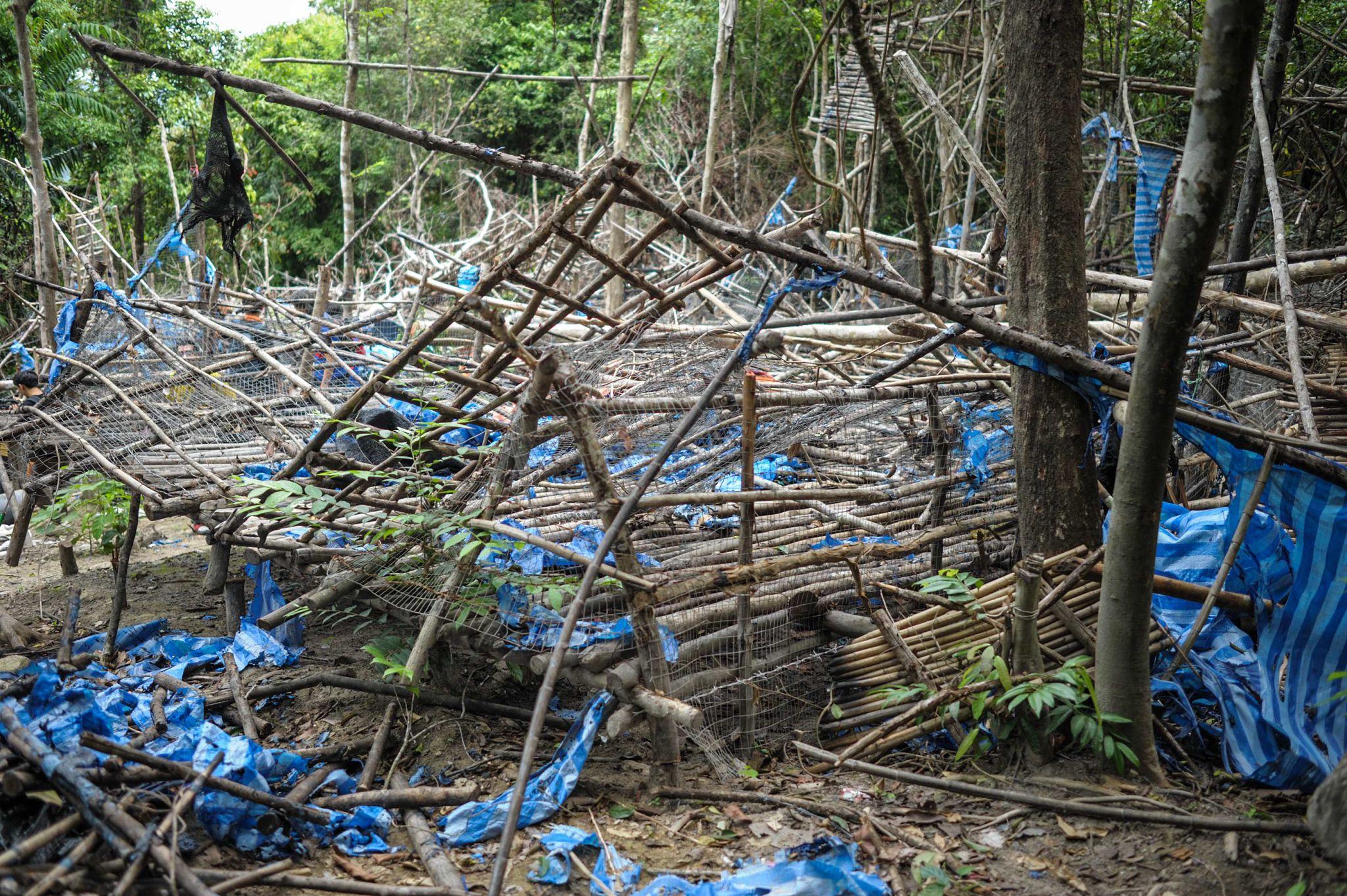
On 25 May 2015, Malaysian police announced the discovery of 139 graves and twenty-eight suspected trafficking camps around Wang Kelian in Perlis State. The sites lay on the Malaysian side of the border, close to the area where the Thai discoveries had attracted international attention. The announcement established that the investigation could not be contained within Thailand: places of captivity and burial existed across the shared frontier.
The announced number of graves must not be presented as a verified count of Rohingya deaths. Graves, recovered remains and individually identified victims are different categories of evidence. The burial sites were believed to contain Rohingya and Bangladeshi trafficking victims, but that description did not establish every deceased person’s identity. Preserving these distinctions matters for families seeking an accurate account of who was found and who remained missing.
What Malaysian Authorities Knew in January
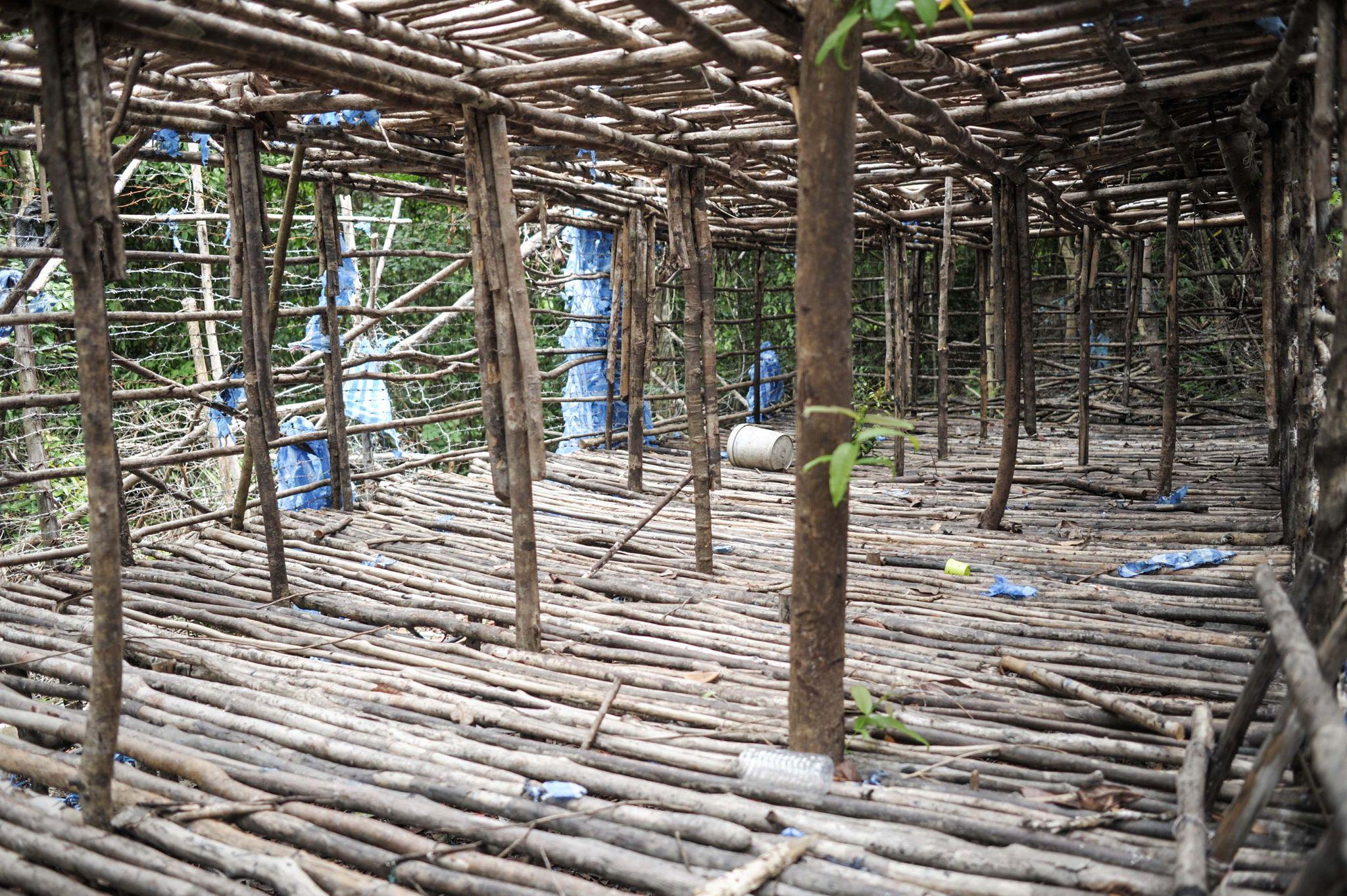
The later joint investigation by the Human Rights Commission of Malaysia, SUHAKAM, and Fortify Rights reconstructed events preceding the May announcement. Its detailed account placed a police operation at Wang Burma hill in Wang Kelian on 19 January 2015. Officers encountered a camp containing enclosed structures and detained thirty-eight men during the operation and surrounding interception. An inter-agency meeting followed on 20 January, when an order was issued to destroy the camp.
Treating Camp Survivors as Immigration Offenders
SUHAKAM’s investigation also found that the thirty-eight men detained during the January operation were charged under immigration legislation rather than protected as trafficking victims. This occurred despite an investigating officer’s assessment that the camp was used to hold people before transferring them to others or to a syndicate in Malaysia. The finding exposed a specific failure at the moment authorities encountered the camp’s occupants.
An inquiry into the graves consequently needed to examine the treatment of the living as well as the handling of the dead. The people found during the raid were potential witnesses to the site’s operation. Classifying their presence principally as an immigration offence diverted attention from why they had been confined there and who had controlled their movement. This was an investigative failure with direct consequences for Rohingya protection.
Delayed Exhumations and the Loss of Forensic Evidence
Malaysia’s later Royal Commission of Inquiry provided further information about the delay. As summarized by Fortify Rights in October 2022, authorities took action on 6 March 2015 to verify whether suspected graves contained human remains, while a full forensic exhumation began only on 24 May. The commission recorded orders to place the investigation on hold. A senior official’s explanation that the authorities were uncertain whether the camps lay in Malaysia or Thailand did not remove the need to investigate.
The consequences extended beyond lost time. Fortify Rights’ account of the commission’s findings stated that forensic specialists could establish causes of death for only two of the 114 exhumed victims considered in that account. A forensic expert told the commission that earlier examinations would have improved the prospects of determining identities and causes of death. These figures belong to that particular inquiry record; they should not be substituted for the original count of 139 graves.
For relatives, the deterioration of evidence could mean losing an opportunity to learn how a missing family member died. For investigators, it could make establishing a connection between a particular death and a perpetrator’s actions more difficult. The delay therefore affected both the families’ search for answers and the evidence available for prosecution.
Thailand’s Investigation Reaches Powerful Suspects
In Thailand, the inquiry developed into a major criminal case during 2015. Fortify Rights reported in December that the investigation led by Police Major General Paween Pongsirin had resulted in ninety-one arrests. The accused included officials from military, police and other state bodies, alongside civilian defendants. The trial began in Bangkok Criminal Court on 10 November 2015. These were allegations under examination, not findings that every accused person was guilty.
The investigation’s reach was accompanied by allegations of interference. Paween told Fortify Rights that senior officials had obstructed and prematurely stopped the inquiry, preventing investigators from continuing to trace financial connections. He resigned on 5 November and subsequently left Thailand because he feared for his safety. His departure demonstrated the difficulty of investigating a network when the evidence potentially implicated people exercising public authority.
A Rohingya Witness Forced into Hiding
Threats also reached Rohingya people who helped investigators. In its 24 December 2015 report, Fortify Rights described the experience of a longtime Rohingya resident of Thailand, identified under the protective pseudonym “Mohammed Razam.” He had supported the police investigation and possessed knowledge of trafficking operations. He reported threats from military officials and suspected associates of traffickers, including instructions to leave the country and withdraw from the case.
Fortify Rights stated that only twelve of approximately five hundred scheduled witnesses were receiving formal witness protection at that time. The discrepancy exposed how fragile the proceedings could become if people with relevant knowledge were expected to testify while fearing retaliation. For Rohingya witnesses, participation in an investigation did not automatically bring safety; in this documented case, helping expose the network forced a community member into hiding.
BROUK’s Assessment of the Investigation
The Burmese Rohingya Organisation UK and Fortify Rights examined the response during a joint mission in February–March 2016. Their briefing, Everywhere Is Trouble, acknowledged Thailand’s action to uncover graves, dismantle camps and bring defendants to trial. It also challenged the premature closure of the investigation and urged authorities to investigate individuals at the highest levels of trafficking networks, including implicated officials regardless of rank.
This assessment preserved two parts of the record: the investigation produced meaningful steps, and those steps did not establish that the entire network had been dismantled. BROUK and Fortify Rights cited testimony suggesting additional graves and information indicating that trafficking syndicates remained active. Their position made continued investigation a necessary response to unresolved evidence, rather than treating the first arrests as proof that the danger had ended.
Later Inquiries into the Handling of Wang Kelian
Malaysia established a Royal Commission of Inquiry in 2019 to investigate the Wang Kelian discoveries. Its hearings included police personnel and Rohingya survivors. By September 2020, however, Fortify Rights was still calling for publication of the commission’s final report. The delay in disclosure created another barrier between the inquiry and the people whose experiences it was intended to examine. These were later developments concerning the handling of the 2015 crimes, rather than events that occurred during the original discoveries.
Fortify Rights connected disclosure to survivors’ and relatives’ right to truth: access to relevant information about the violations, the victims’ fate and the official response. An inquiry could collect testimony and produce recommendations while leaving families unable to assess its findings. Public access therefore formed part of accountability, alongside the investigation of offences and the prosecution of those responsible.
The Graves as a Record of Rohingya Loss
The distinct significance of the discoveries lies in what they revealed about the institutions responsible for uncovering the crimes. Investigators had to confront damaged scenes, delayed examinations, the prosecution of potential victims for immigration offences and threats against people assisting the Thai case. These failures shaped how much could be established about the dead and how safely survivors could contribute to the record.
For Rohingya families, the graves could not resolve the crisis merely by becoming known. Recognition required the careful recovery and identification of victims, credible explanations of the deaths and an investigation capable of following responsibility beyond the people physically operating a camp. The history of Songkhla and Wang Kelian must therefore preserve both the discoveries and the decisions that helped—or hindered—the search for truth.