The major development in Arakan on 28 September 2026 was a deadly Myanmar
military airstrike on the India Market and adjacent Kissapanadi Bridge over the
Kaladan River in Kyauktaw. The attack struck around midday while the market,
described by rescue officials as an important wholesale centre, was being used
by vendors, shoppers and other civilians. Initial reports from the Arakan Army
and rescue personnel recorded 33 people killed and 36 injured, but later
reporting raised the toll to at least 49 dead and 58 wounded, including 22
people reported to be critically injured.
Kyauktaw has been under the control of the Arakan Army since 2024, and
the Myanmar military has increasingly relied on air power against areas it no
longer controls on the ground. A local aid worker told Reuters that the
location struck on Monday was far from active fighting and had no connection
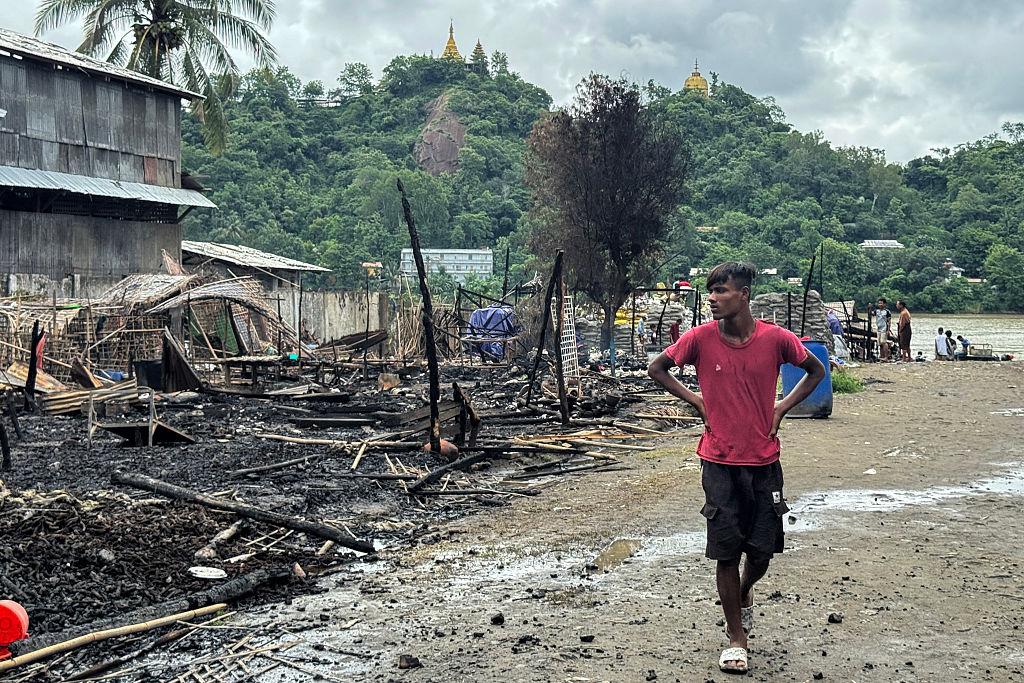
with the immediate battlefield. Photographs and videos from Kyauktaw showed
burning buildings, damaged vehicles, debris and damage to parts of the bridge.
The Kissapanadi Bridge is an important crossing of the Kaladan River on the
road connecting Kyauktaw with Mrauk-U, Minbya and Myebon.
The attack occurred amid an already severe humanitarian situation across
Arakan. Trade restrictions and continuing warfare have contributed to shortages
of food and other necessities, while large numbers of civilians remain
displaced. Al Jazeera reported that nearly half a million people have been
displaced in Rakhine as a consequence of the conflict. The destruction of a
major market and damage to an important transportation route therefore have
consequences extending beyond the immediate casualties, particularly for
communities dependent on Kyauktaw for trade and supplies.
Rohingya community reports following the attack claimed that Rohingya
civilians were among those affected and circulated substantially higher
casualty estimates. These claims had not been independently established by the
end of the day. The available international reporting did not provide a
verified breakdown of the victims by ethnicity. Rohipedia therefore records
these community reports as developing information requiring victim
identification, survivor testimony and further corroboration.
The incident also renewed concerns among Rohingya about their
vulnerability between the Myanmar military and the Arakan Army. Rohingya
community voices have previously alleged that AA military activity in or near
Rohingya-populated civilian areas can expose residents to Myanmar military
retaliation. Human-rights organizations have separately documented serious
abuses and restrictions affecting Rohingya during the wider conflict. However,
evidence available on 28 September did not establish that the AA deliberately
caused the Kyauktaw airstrike or intentionally exposed civilians there for the
purpose of attracting an attack.
By the end of 28 September, the full scale of the Kyauktaw casualties was
still emerging. Early figures changed as rescue workers recovered additional
victims, demonstrating why casualty totals from major attacks should be treated
as provisional during the first hours after an incident. Identification of the
dead and injured, particularly the reported Rohingya victims, remained an
important outstanding task.